
Introduction
For international importers, distributors, and e-commerce brand owners sourcing electrical accessories, product safety compliance is a critical part of supply chain management. UK market surveillance authorities continue to identify non-compliant electrical products, including multi-socket extension leads that fail applicable safety requirements.
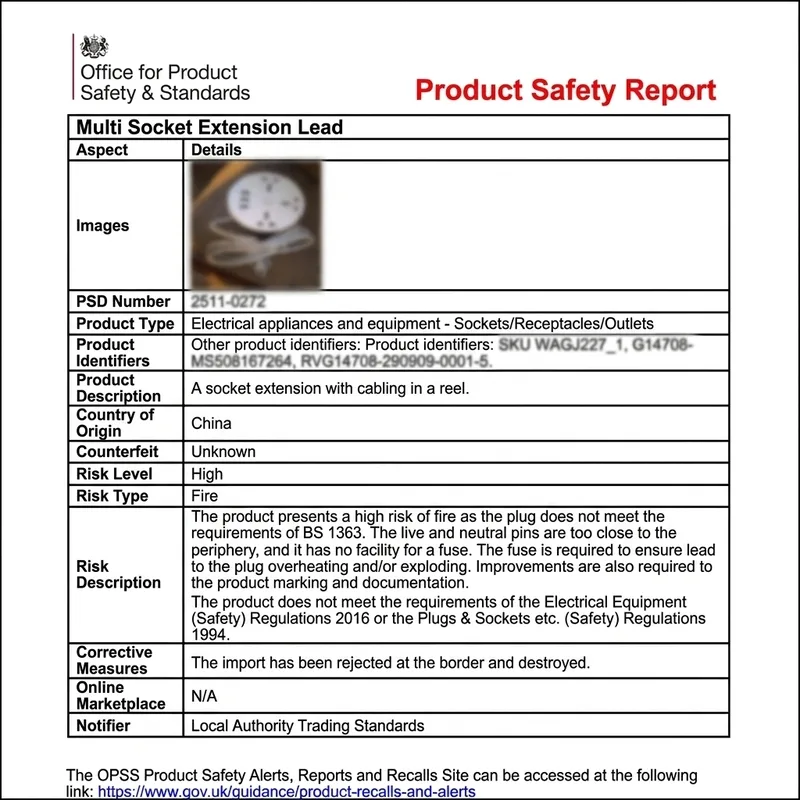
A notable example is the official UK OPSS report, Product Safety Report: Multi Socket Extension Lead (2511-0272), published on 4 December 2025. The product presented a high risk of fire due to insufficient creepage and clearance distances and non-compliant plug pin dimensions. Its import was rejected at the border, and the product was destroyed.
This case highlights why plug construction, internal electrical clearances, and product documentation deserve careful attention when sourcing extension leads for the UK market.
Top Reasons Imported Power Strips Fail Safety and Compliance Inspections
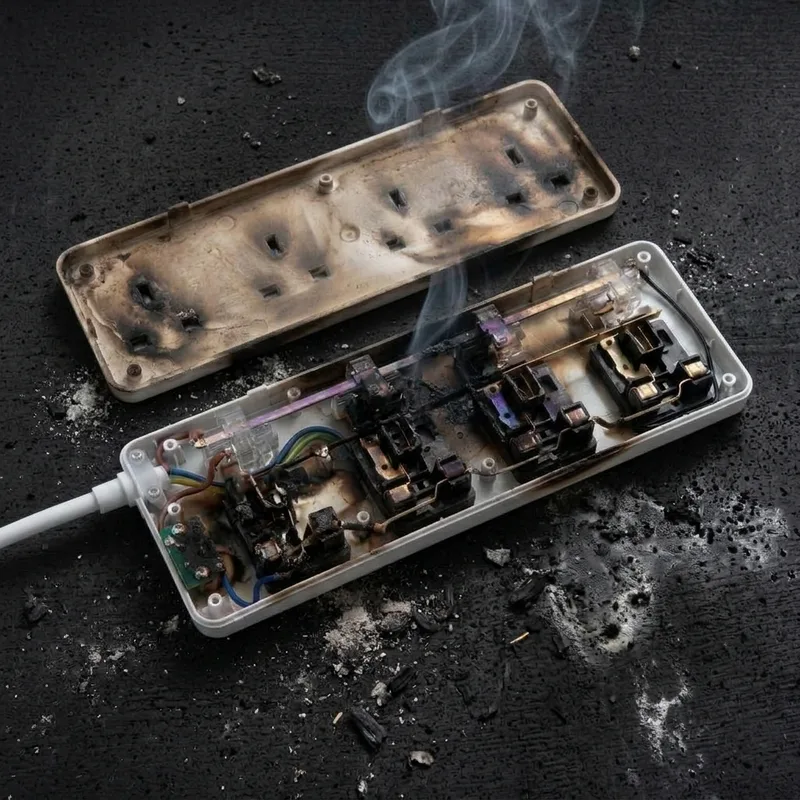
When authorities assess imported Multi-Socket Extension Lead safety guide covering UK plug requirements, common electrical hazards, BS 1363 compliance, and essential checks for importers. and extension leads, non-compliance may involve several critical aspects of electrical safety, product construction, and material performance. Three areas deserve particular attention:
- Insufficient Creepage and Clearance Distances: Inadequate spacing between live electrical parts, or between live parts and accessible conductive components, can increase the risk of electrical arcing, insulation breakdown, and short circuits. These distances must meet the applicable requirements based on the product design, rated voltage, and insulation system.
- Non-Compliant Plug Pin Design: Incorrect plug pin dimensions, improper construction, or missing required insulation sleeves on live and neutral pins can affect electrical contact and user safety. For UK-market products, BS 1363 plug designs must meet the relevant dimensional, construction, and safety requirements.
- Undersized Conductors and Inadequate Material Protection: Conductors with an insufficient cross-sectional area may generate excessive heat under electrical load. In addition, unsuitable housing materials with inadequate thermal and flame-retardant properties can increase fire risks. Overload protection and other protective features should also be appropriate for the product’s rated capacity and applicable safety requirements.
For importers and distributors, non-compliant power strips can result in serious commercial consequences. Depending on the nature and severity of the violation, products may be detained, refused entry, withdrawn from the market, recalled, or required to be destroyed. Regulatory penalties and marketplace listing suspensions or removals may also occur under applicable laws and platform policies.
For this reason, buyers should verify product specifications, plug compliance, conductor sizes, material performance, and relevant test documentation before placing large-volume orders.
Engineering Standards for Safe, Market-Ready Extension Leads
To ensure seamless customs clearance and long-term product durability, high-quality power strips must incorporate strict safety-by-design principles:
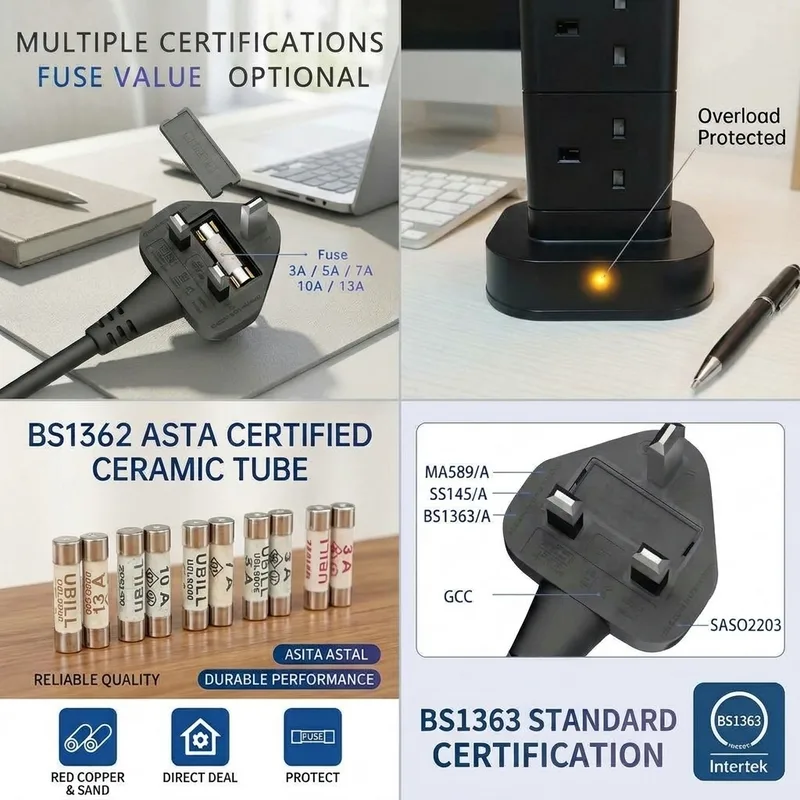
A. Certified BS 1363/A Plug & Integrated Fuse Protection
For the UK and compatible international markets, extension cords must utilize certified BS 1363 plugs equipped with an ASTA or BSI-approved ceramic fuse (such as 13A for heavy-duty extension leads) to break the circuit safely in the event of an electrical overload.
B. Flame-Retardant PC/ABS Enclosures & Pure Copper Strips
The internal busbars of a power strip should be constructed from 100% pure phosphor bronze or high-conductivity copper for low electrical resistance. Furthermore, outer enclosures must pass stringent 750°C glow-wire tests using flame-retardant PC/ABS materials.
C. Overload Protection & Safety Shutters
Modern power strips should incorporate integrated thermal circuit breakers and child-safety protection shutters inside the socket apertures to prevent accidental pin contact or shock.
Why Choose SEBLIP UK Extension Leads? Guaranteed BS 1363 Compliance & Engineered Safety
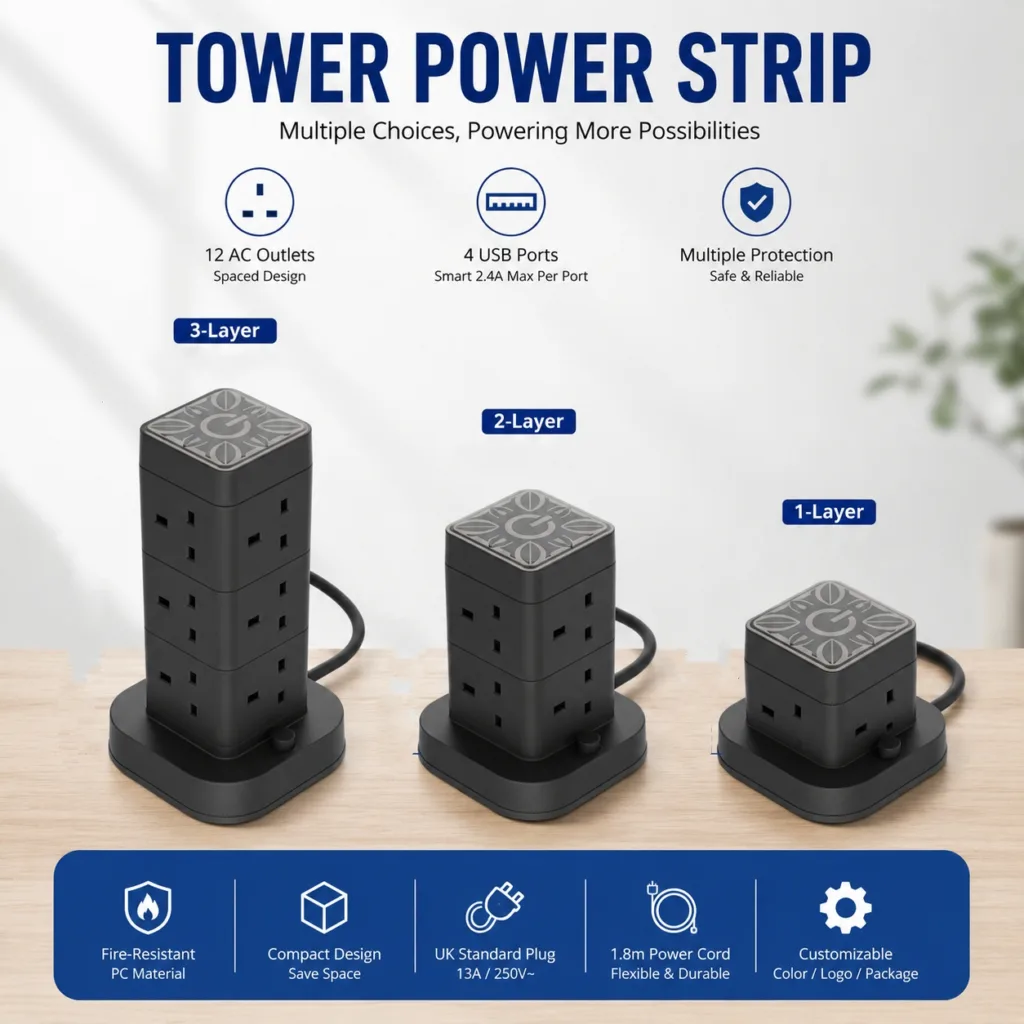
At SEBLIP, we manufacture heavy-duty extension leads and UK Multi-Socket Extension Lead engineered specifically to solve supply chain compliance challenges. Built in our vertically integrated 40,000m² manufacturing facility in Dongguan, our extension leads combine premium engineering with uncompromising quality control:
- Certified BS 1363 Plugs with Integrated Fuse: Every extension lead is fitted with a fully compliant BS 1363/A molded plug containing a high-grade, ASTA/BSI-certified ceramic fuse (3A–13A options) to ensure automatic circuit interruption during current overloads.
- Flame-Retardant PC Enclosure: Manufactured using high-impact, fire-resistant PC (Polycarbonate) housing materials that pass rigorous 750°C glow-wire safety tests, preventing melting and combustion hazards under excessive thermal stress.
- 100% Factory Electrical Testing: Every single unit undergoes 100% automated inspection before packaging—including continuity, insulation resistance, High-Voltage (Hi-Pot) withstand, and ground bond testing.
- Customizable Protection Modules (OEM/ODM): Tailored specifically for your market needs with optional advanced features, including:
- Surge Protection (MOV): Safeguards sensitive IT infrastructure, audio-visual gear, and computers against sudden voltage spikes.
- Overload Protection Switch: Integrated thermal breaker that automatically trips when connected loads exceed rated capacity.
- Custom Configurations: Flexible cable lengths (1.5m, 3m, 5m+), USB-A/USB-C fast charging ports, and custom branding/packaging options.
FAQ
Q1: Do UK extension leads require a fuse in the plug?
A: UK extension leads with BS 1363 fused plugs use fuses complying with BS 1362. Common ratings include 3A, 5A, and 13A, depending on the product specifications and intended load.
Q2: What is the difference between pure copper and CCA conductors?
A: Pure copper offers higher conductivity and lower electrical resistance than CCA of the same cross-sectional area. Buyers should verify conductor material and size to ensure the cable meets its rated electrical requirements.
Q3: Can SEBLIP customize plug types, cable lengths, and logos?
A: Yes. SEBLIP supports OEM/ODM customization, including plug designs, cable lengths, wire specifications, colors, logo printing, and packaging.
Q4: What is the difference between surge protection and overload protection?
A: Surge protection helps limit transient voltage spikes, while overload protection interrupts the circuit when the connected load exceeds the product’s specified capacity.
Q5: Why are flame-retardant PC materials used in power strips?
A: Flame-retardant PC provides electrical insulation and heat resistance. Its actual flame-retardant performance should be verified through relevant test reports, such as UL 94 or applicable glow-wire testing.