
A power cord may be marked with a specific conductor size, voltage rating, current rating, and cable type. But how can buyers confirm that the delivered product strictly matches the approved power cord specifications?
A UK product safety report published in October 2026 highlighted this concern. The report identified a power cable with a conductor cross-sectional area of approximately 0.493 mm², despite being marked as 0.75 mm². The authorities assessed the product as presenting a high risk of fire.
This case shows why buyers need to verify product specifications before approving bulk orders.

Why Must Power Cord Specifications Match the Finished Product?
Power cord specifications describe the product that a buyer expects to receive. They may include conductor material, cross-sectional area, number of cores, insulation material, rated voltage, rated current, cable length, plug type, and applicable standards.
If the delivered product differs from the approved specification, the consequences depend on the type and extent of the discrepancy.
For example, a smaller-than-declared conductor may have higher electrical resistance than expected. An incorrect plug configuration may not meet the requirements of the destination market. Different insulation materials may also affect the product’s suitability for its intended operating conditions.
These discrepancies may not be obvious from a visual inspection of the finished cable.
For this reason, buyers should compare three things before approving an order:
- The agreed technical specification
- The actual product and its construction
- The relevant inspection records and compliance documents
The goal is to confirm that the product supplied is the same as the product that was evaluated and approved.
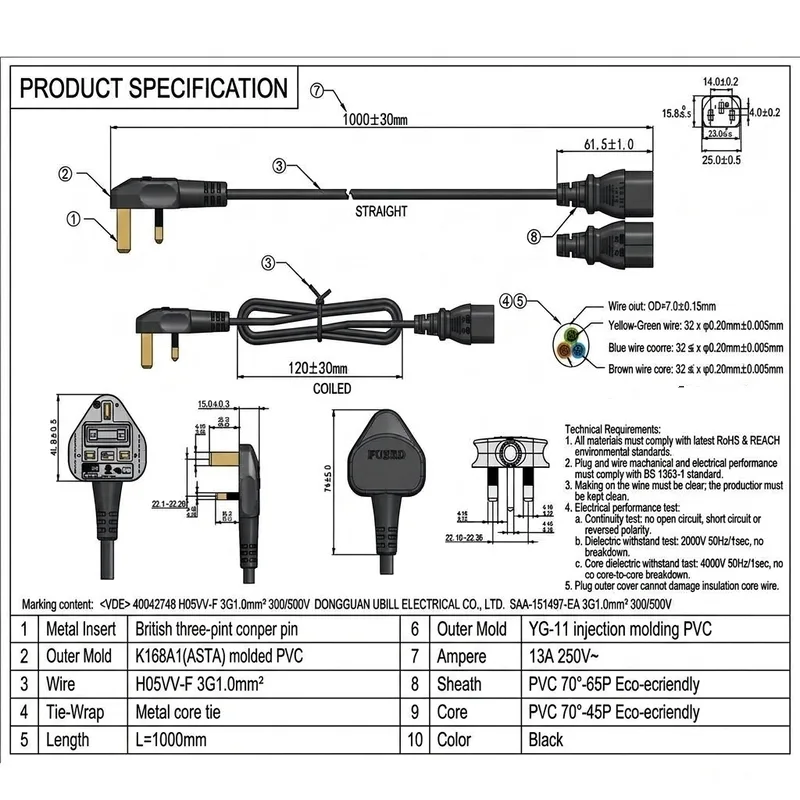
Check the Conductor Material and Cross-Sectional Area
The conductor is one of the most important parts of a power cord. Its material, construction, and cross-sectional area affect electrical resistance and current-carrying capability.
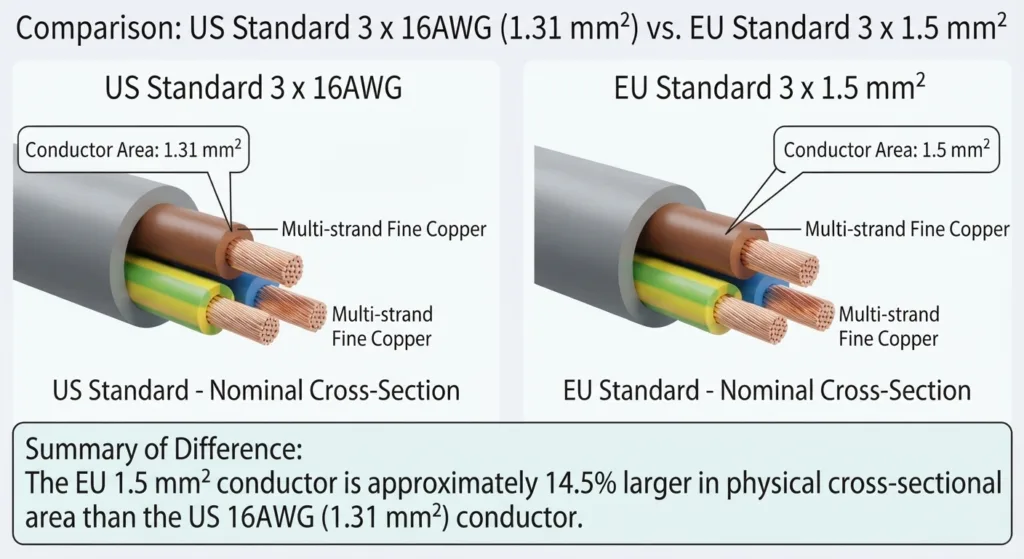
1. Confirm the Declared Conductor Size
Cable specifications commonly identify conductor size in square millimetres, such as 0.75 mm², 1.0 mm², or 1.5 mm².
Buyers should confirm that the conductor size shown on the quotation and technical data sheet matches the approved product requirements. For stranded conductors, the assessment should consider the actual conductor construction and the applicable requirements rather than relying only on the overall diameter of the stripped wire.
The IEC 60228 standard addresses nominal cross-sectional areas, conductor construction, and resistance requirements for applicable conductors used in power cables and cords. Its application depends on the cable type and relevant product requirements.
Reference: IEC 60228 — Conductors of Insulated Cables.

2. Understand Why Conductor Size Matters
A conductor that is smaller than specified may have greater electrical resistance. Under simplified steady-state conditions, resistive heating can be described by:
P = I²R
Where:
- P is the power converted into heat.
- I is the current flowing through the conductor.
- R is the electrical resistance.
At the same current, higher resistance produces more heat. However, conductor size alone does not determine whether a cable is safe. Material, cable construction, insulation, operating temperature, rated current, and applicable standards must also be considered.
Verify the Cable Material and Construction
Conductor size is only one part of the specification. Buyers should also verify the materials and construction of the complete cable.
1. Conductor Material
Confirm whether the approved design specifies copper, aluminium, or another permitted conductor construction. Do not assume that a product meets a particular material specification simply because the quotation describes it as a copper power cord.
Where conductor material is critical to the project, request appropriate technical documentation or test evidence.
2. Insulation and Outer Sheath
The insulation and outer sheath must be suitable for the intended application and meet the relevant product requirements.
Buyers should check the specified material, temperature rating, cable type, and any applicable flame-retardancy or other performance requirements. These properties should be verified against the approved design and supporting documentation.
3. Number of Cores and Cable Configuration
Check the number of cores, conductor sizes, cable shape, and overall configuration.
For example, a two-core cable and a three-core cable are not interchangeable simply because they have similar external dimensions. The correct construction depends on the equipment, plug configuration, earthing requirements, and intended application.
Check Rated Voltage, Current, and Plug Specifications
The ratings printed on a product must correspond to its approved design and intended application.
2. Plug Type and Market Requirements
Plug configurations vary between markets. UK, US, EU, Australian, and other plug types have different physical designs and applicable requirements.
For products intended for the UK market, buyers should confirm the exact plug type and relevant compliance evidence for the specific model. A plug that resembles a standard design should not automatically be assumed to comply with that standard.
3. Fuse and Other Protective Features
Where the design includes a fuse or another protective component, confirm its specification and suitability for the intended application.
Protective features do not compensate for incorrect conductor dimensions, unsuitable materials, or non-compliant plug construction. Each part of the complete assembly must meet the applicable requirements.
Review Test Reports and Quality Inspection Records
A technical data sheet describes the intended product, while inspection and test records provide evidence about the product that was evaluated.
Before placing a bulk order, buyers should ask which inspections and tests apply to the specific power cord and how the results are documented.
Depending on the product design and applicable requirements, verification may include:
- Conductor construction and resistance checks
- Plug dimensions and component inspection
- Continuity and polarity checks, where applicable
- Insulation-related electrical tests
- Verification of product markings and identification
- Review of relevant compliance documents
Not every test applies to every power cord. The appropriate verification plan should be established according to the product’s design, destination market, and applicable requirements.
Buyers should also check whether the documentation refers to the exact model being purchased. A report for a similar-looking product may not establish compliance for a different construction or configuration.
For large or customized orders, agreeing on inspection criteria before mass production can help reduce disputes over product specifications after delivery.

Compare the Approved Sample with the Bulk Order
A sample approved during product development is not useful if the mass-produced goods differ from it.
Before production, buyers should confirm the approved specifications, drawings, cable construction, plug type, markings, and any other critical requirements. These details should be communicated clearly to the manufacturer.
For bulk production, a practical process may include:
- Confirming the final technical data sheet and product configuration.
- Approving a sample against the agreed requirements.
- Defining the inspections and tests required during production and before shipment.
- Checking the finished goods against the approved specification.
- Retaining relevant records for future reference.
If any material, component, or construction detail changes, the buyer should ask the supplier to disclose the change and confirm whether additional approval or testing is required.
This process is particularly important for OEM and ODM projects, where specifications may be customized for a particular brand or market.
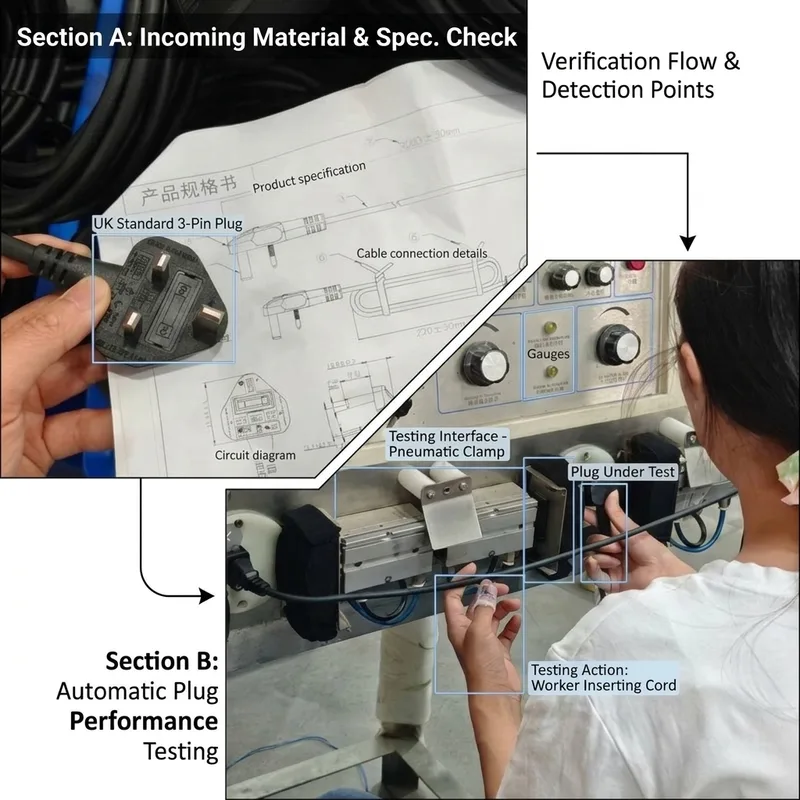
Choosing a Power Cord Manufacturer with Clear Quality Controls
A manufacturer’s production capability matters, but buyers should also understand how specifications are controlled throughout production.
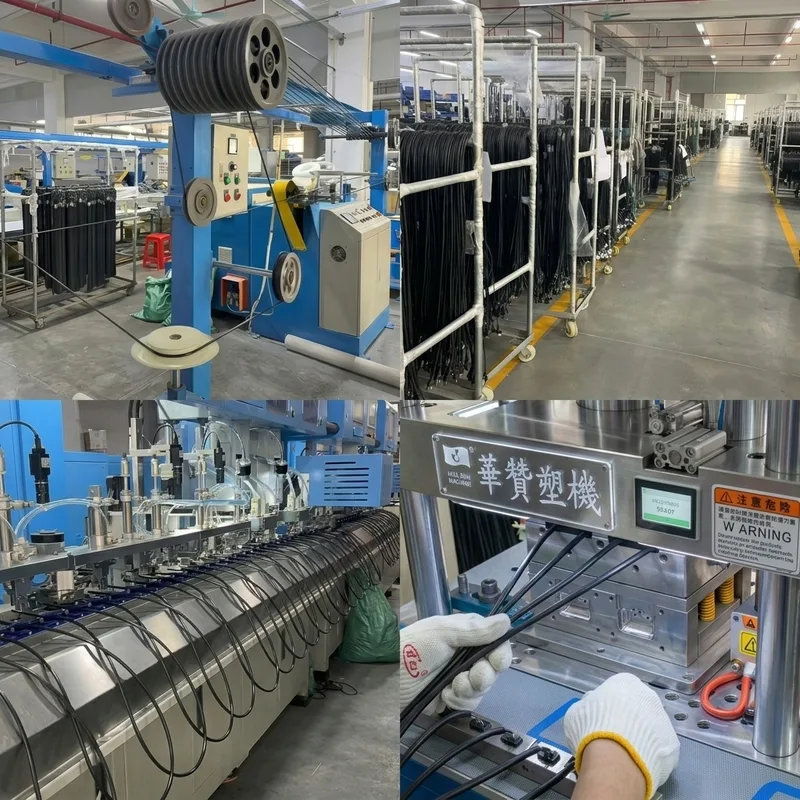
SEBLIP has over 20 years of factory experience and a 40,000 m² manufacturing facility in Dongguan, China. Its integrated manufacturing processes cover wire processing, cable production, injection molding, assembly, electrical testing, quality inspection, and final packaging.
SEBLIP supplies a range of power connection products, including power cords, extension cords, IEC connectors, power adapters, and plug components.
For OEM and ODM projects, buyers can discuss requirements such as plug configuration, cable length, conductor specifications, wire type, product labeling, and packaging. The available options and applicable compliance requirements should be confirmed for each model.
Conclusion
A power cord’s markings and technical data sheet are only part of the picture. Buyers also need confidence that the delivered product matches the approved design.
Checking conductor specifications, cable materials, electrical ratings, plug requirements, and relevant test records can help identify discrepancies before they become larger procurement problems.
For importers and OEM buyers, the most useful approach is to establish clear specifications, agree on verification requirements, and confirm that the finished product matches the approved sample before shipment.
Related reading: UK Power Cord Safety Alert: What the October 2026 BS1363 Plug Report Means for Buyers
Frequently Asked Questions
Q1: Can SEBLIP customize power cords for OEM and ODM projects?
A: Yes. Customization options include plug configuration, cable length, conductor specifications, wire type, product labeling, and packaging. Details and applicable compliance requirements should be confirmed for each project.
Q2: How can buyers verify a power cord’s conductor size?
A: Check the product specifications and cable markings, and request relevant test records if needed. Visual inspection alone is not enough.
Q3: Does a larger conductor always mean a safer power cord?
A: No. Safety also depends on conductor material, insulation, rated current, cable construction, and plug design.
Q4: What documents should buyers request from a power cord supplier?
A: Request the technical data sheet, relevant compliance documents, test reports, and inspection records for the specific product model.
Q5: Why should buyers compare samples with bulk orders?
A: Comparing approved samples with bulk production helps identify differences in materials, cable construction, plug components, and markings before shipment.