
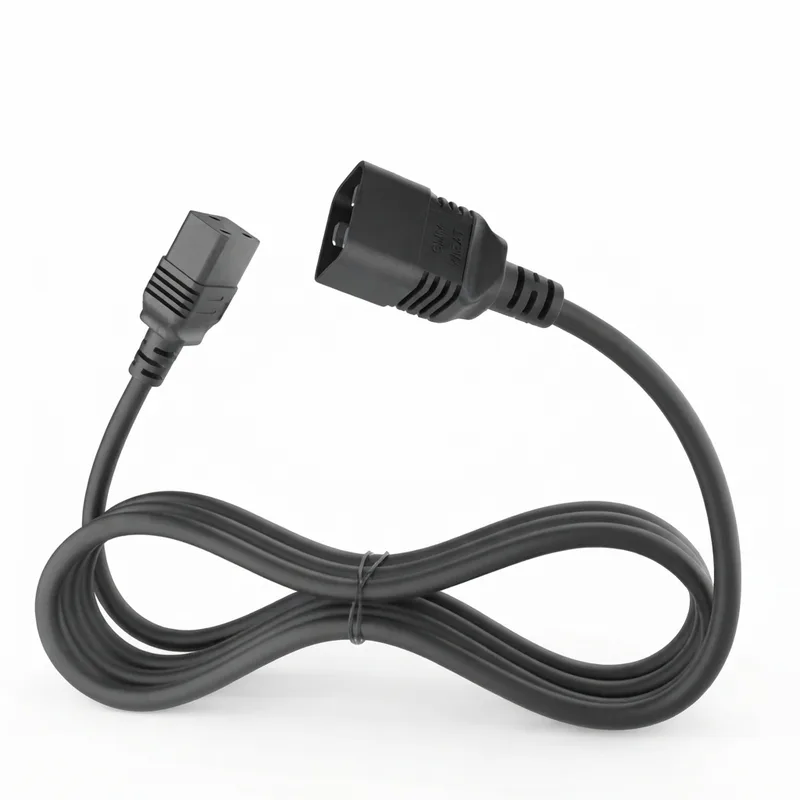
Choosing the right power cord is essential for reliable power connections in servers, data centers, UPS systems, and other high-power equipment. Among IEC 60320 connectors, C19 and C20 are closely related but serve different functions. Understanding the difference between a C19 power cord connector and a C20 equipment inlet helps buyers select compatible power connection solutions for their applications.
In this guide, SEBLIP explains the differences between IEC C19 and IEC C20, their common applications, key power cord specifications, and what to consider when sourcing a C19/C20 power connection from a manufacturer.
What Is the Difference Between IEC C19 and C20?
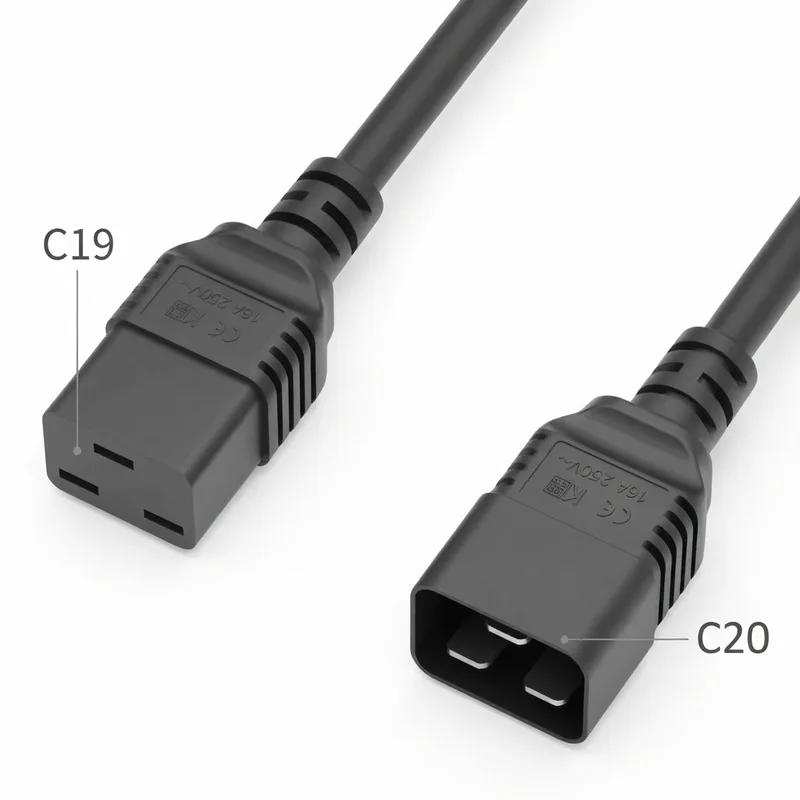
IEC C19 and C20 are complementary connector types in the IEC 60320 family. The main difference is their function: C19 is the female cable connector, while C20 is the male equipment inlet designed to accept it.
C19 vs C20: Key Differences
| Feature | IEC C19 | IEC C20 |
|---|---|---|
| Component type | Cable connector | Equipment inlet |
| Contact arrangement | Three contacts | Three contacts |
| Connection role | Connects the power cord to the equipment | Receives the C19 connector |
| Typical location | End of a power cord | Inlet on compatible equipment |
| Compatibility | Mates with a C20 inlet | Accepts a C19 connector |
Are C19 and C20 Interchangeable?
No. C19 and C20 serve different roles and cannot replace one another. A C19 connector is designed to mate with a compatible C20 inlet.
Before selecting a C19 power cord, verify the equipment’s inlet type, the required cable configuration, and the applicable electrical ratings to ensure compatibility.
C19 vs C13: Which Power Cord Connector Do You Need?
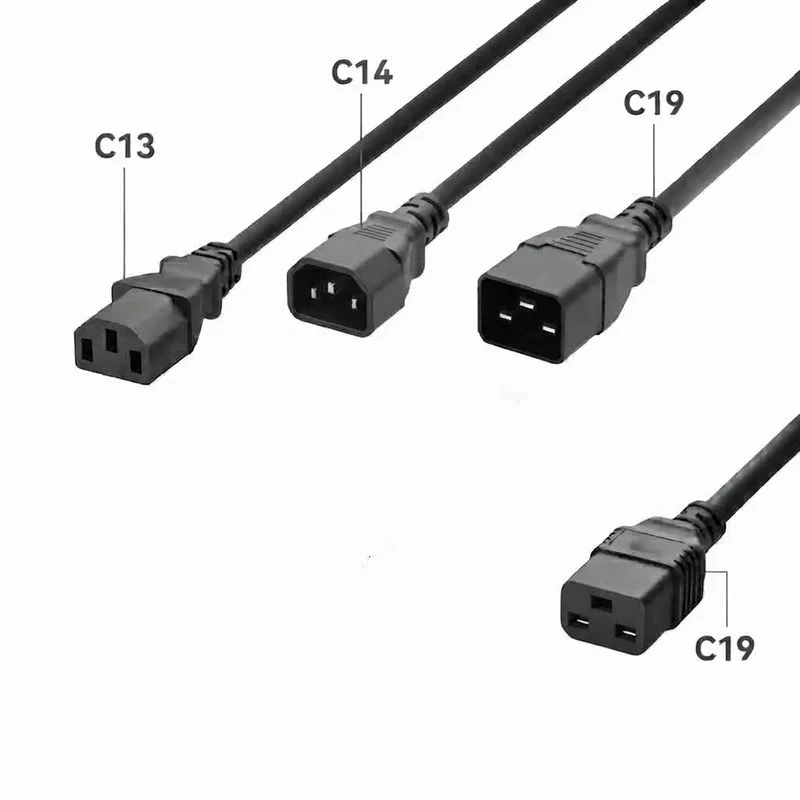
C19 and C13 connectors are both used in equipment power connections, but they differ in physical design and typical current ratings.
C13 power cords connectors commonly mate with C14 inlets and are widely used for desktop computers, monitors, and general IT equipment. C19 connectors mate with C20 inlets and are commonly selected for equipment that requires a higher current-rated connection.
| Feature | C13/C14 | C19/C20 |
|---|---|---|
| Cable connector | C13 | C19 |
| Equipment inlet | C14 | C20 |
| Typical international rating | Up to 10A/250V, depending on approval | Up to 16A/250V, depending on approval |
| Common applications | Computers, monitors, and standard IT equipment | Servers, UPS systems, and compatible PDU equipment |
| Selection priority | Equipment compatibility and required rating | Equipment compatibility and higher-current requirements |
💡 Looking for standard IT power cords? Explore SEBLIP’s IEC C13 to C14 power cords for commercial and office equipment.
These ratings are common IEC-related values, not a guarantee that every cable assembly carries the same approval or rating. Always confirm the product label, applicable national requirements, conductor size, and certification documentation before use.
Common Applications of C19/C20 Power Connections
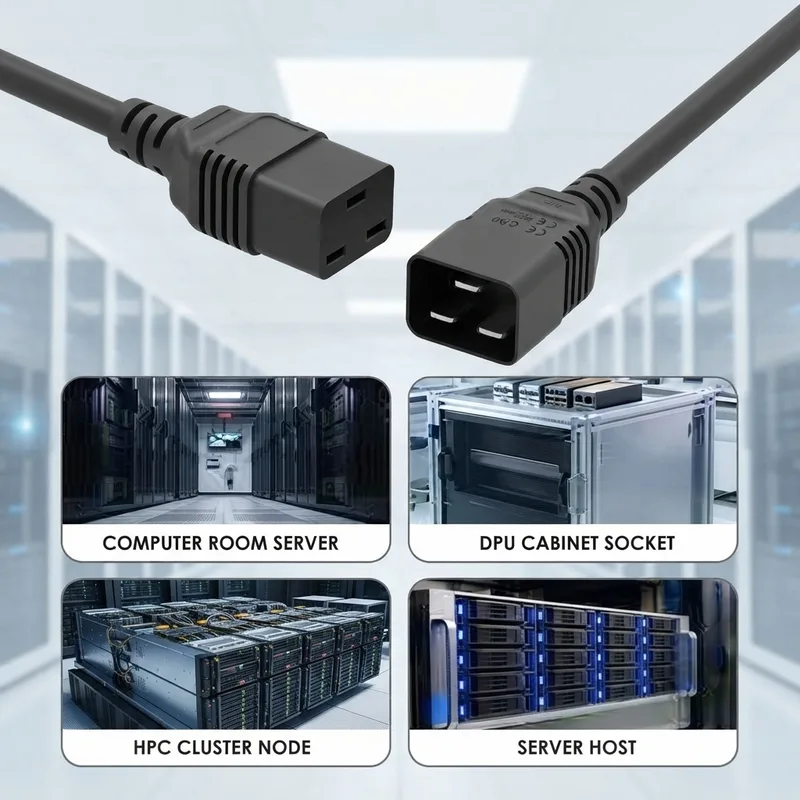
C19/C20 connections are commonly used where equipment requires a compatible, higher-current-rated IEC connection. The appropriate cord assembly depends on the equipment inlet, upstream power source, and electrical requirements.
1. Servers and Data Centers
Servers and rack-mounted computing equipment may require higher-rated power connections depending on their design and power consumption. Selecting the correct C19-compatible cord helps ensure the connection matches the equipment inlet and required electrical rating.
2. Power Distribution Units (PDUs)
PDUs distribute electrical power to multiple devices in server racks and data centers. Depending on the PDU design, C20 inlets and compatible C19 connectors may be used as part of the power connection system.
3. Uninterruptible Power Supply (UPS) Systems
Some UPS systems use C19/C20 connections for input or output power interfaces. Buyers should check the exact UPS model, inlet or outlet type, and rated current before selecting a replacement or customized cable assembly.
4. Networking and Industrial Equipment
Certain networking systems and commercial equipment require IEC connectors designed for their electrical load and installation conditions. The correct connector, cable construction, and rating should always be determined by the equipment manufacturer’s specifications.
What to Look for in a C19/C20 Power Cord Manufacturer
For OEM projects and bulk purchasing, choosing a suitable power cord manufacturer can help buyers coordinate product specifications, customization, testing, and supply requirements.
Consider the following factors when evaluating a supplier.
- Manufacturing capabilities: Check whether the supplier can support the required cable processing, connector assembly, and production workflow.
- Material and specification control: Confirm conductor material, wire size, insulation, cord length, and connector requirements.
- Electrical testing and quality inspection: Ask how finished cable assemblies are inspected and tested against the applicable product requirements.
- OEM and ODM customization: Confirm whether the manufacturer can support project-specific cable lengths, connector configurations, labels, and packaging.
- Compliance documentation: Request valid documentation for the exact model and target market.
- Production and delivery planning: Discuss MOQ, sample arrangements, production lead time, and packaging before placing a bulk order.
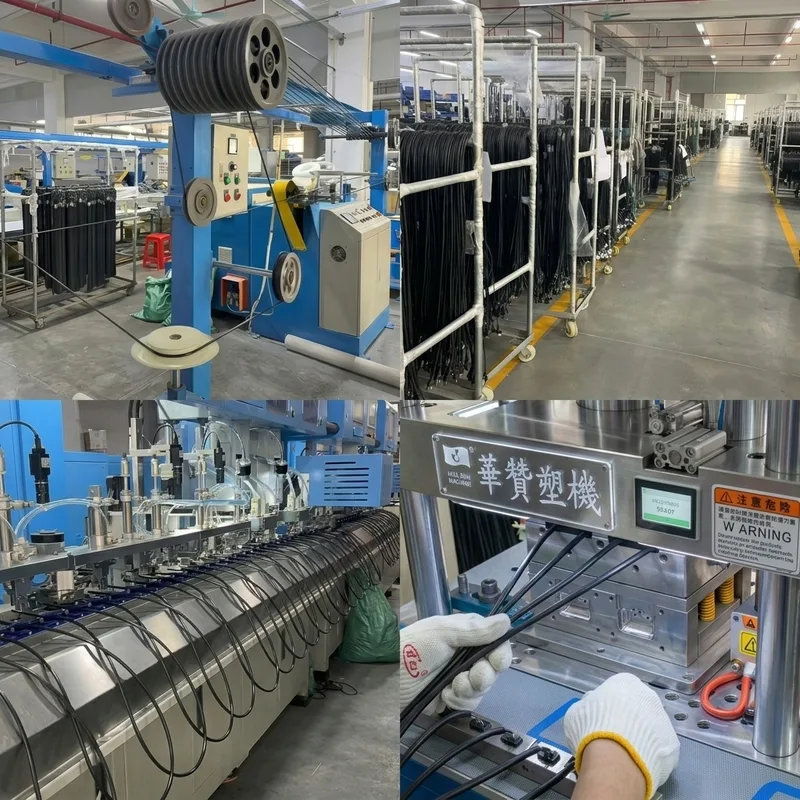
SEBLIP C19/C20 Power Cord Solutions
SEBLIP supplies power cords and related power connection products for different equipment and market requirements. Our product range includes IEC power cords, extension cords, power strips, adapters, and plug components.
With over 20 years of manufacturing experience and a 40,000 m² manufacturing facility, SEBLIP integrates wire processing, cable production, injection molding, assembly, electrical testing, quality inspection, and final packaging into its manufacturing operations.
For C19/C20 power cord projects, buyers can discuss applicable connector configurations, conductor specifications, cable length, product ratings, and packaging requirements with our team. Final specifications and compliance claims should be confirmed for the exact model and intended market.
Explore our C20 to C19 power cord product page for more product information, or contact SEBLIP to discuss your project requirements.

Frequently Asked Questions
1. What is the main difference between C19 and C20?
C19 is a female cable connector, while C20 is a male equipment inlet. They are designed to mate together in compatible IEC power connection systems.
2. Is a C19 connector compatible with a C20 inlet?
Yes. A C19 cable connector is designed to mate with a compatible C20 equipment inlet. Always verify the ratings and requirements of the complete power cord assembly.
3. What is the difference between C19 and C13 power cords?
C19 connectors are typically used for higher-current-rated equipment and mate with C20 inlets. C13 connectors are commonly used with C14 inlets on computers, monitors, and other standard IT equipment. The correct choice depends on the equipment’s specifications.
4. What should I check before buying a C19/C20 power cord?
Confirm the connector configuration, voltage and current ratings, conductor size, cable length, destination-market requirements, and applicable certification documents.
5. Can C19/C20 power cords be customized?
Customization may be available for cable length, conductor specifications, connector configuration, labeling, and packaging, depending on the manufacturer’s capabilities and the technical requirements of the project.
6. Does SEBLIP support OEM and ODM power cord projects?
Yes. SEBLIP supports OEM and ODM discussions for power cords and related electrical products. Contact our team with your required specifications, target market, quantity, and customization needs to discuss project feasibility.
Conclusion
Understanding C19 vs C20 power cord terminology helps buyers distinguish the cable connector from the equipment inlet and select a compatible power connection. C19 connectors are designed to mate with C20 inlets, while the final cord assembly must also meet the equipment’s electrical ratings, cable requirements, and applicable compliance standards.
For servers, UPS systems, PDUs, and other compatible equipment, confirm the connector configuration and complete cable specifications before purchasing. Working with an experienced power cord manufacturer can also help streamline OEM customization, quality requirements, and supply planning.
Contact SEBLIP to discuss your C19/C20 power cord requirements and customized power connection solutions.