
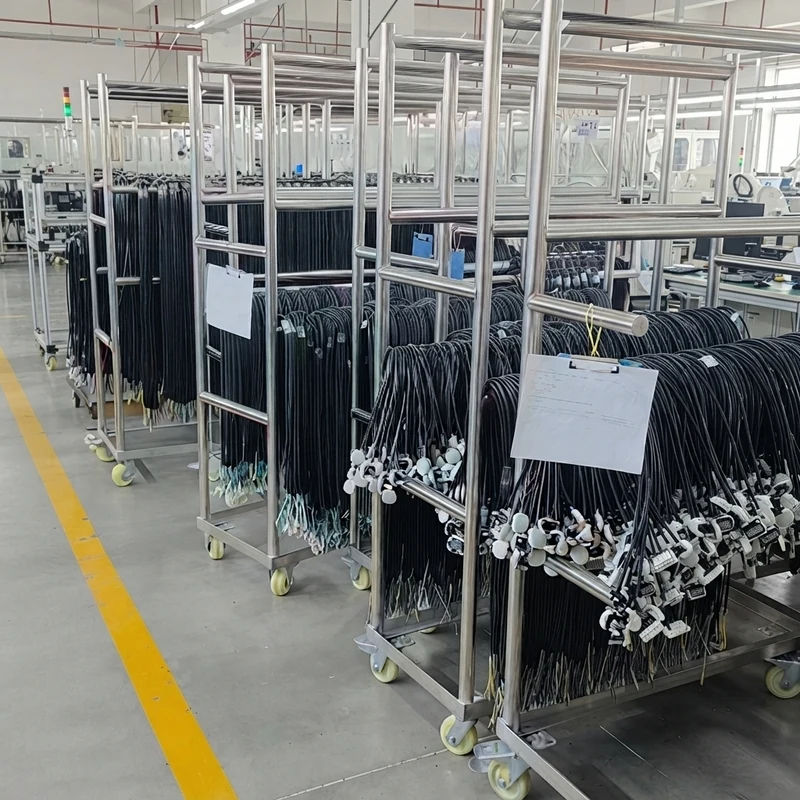
Power cords and extension cords are both common electrical accessories, but they are designed for different purposes. While a power cord connects electrical equipment directly to a power source, an extension cord extends the reach of an existing power connection when the outlet is too far away.
For distributors, wholesalers, importers, electrical brands, and other B2B buyers, understanding the difference between these two products is important when selecting the right cable specification, connector type, length, and rated power.
This guide explains the key differences between power cords and extension cords, their typical applications, construction, electrical ratings, and the factors buyers should consider when sourcing them.
What Is a Power Cord?
A power cord is an electrical cable designed to supply power from an outlet or other power source to a specific piece of equipment.
Depending on the market and application, terms such as AC power cord, AC power cable, power cable, and power supply cord may also be used to describe similar products.
Common examples include:
- Computer power cords
- AC power cords
- Appliance power cords
- IEC power cords
- UK power cords
- US power cords
- EU power cords
- Australian power cords
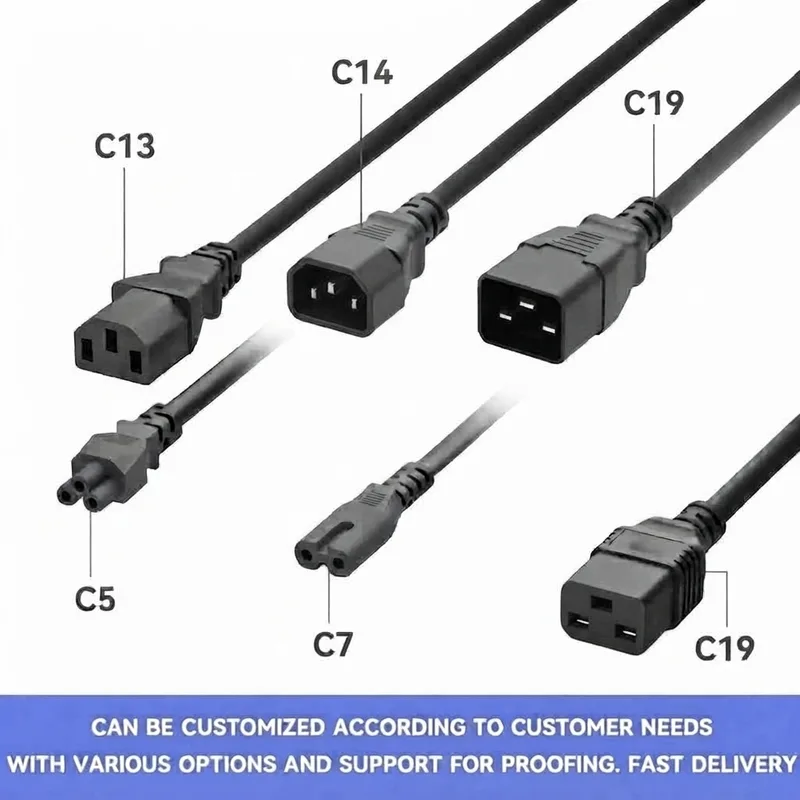
- C13 power cords
- C14 power cords
- C19 power cords
- C20 power cords
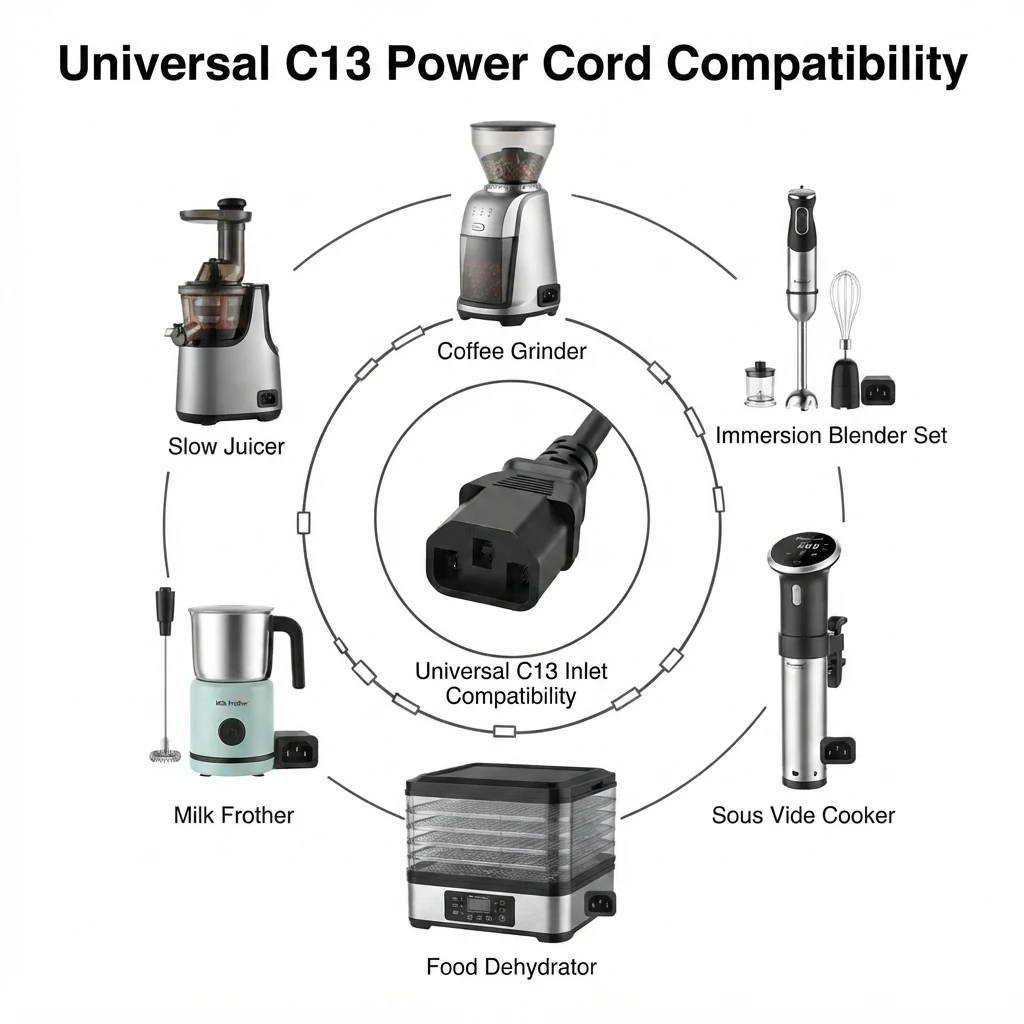
For example, an IEC C13 power cord is commonly used with computers, monitors, servers, networking equipment, and other electrical devices designed with a compatible C14 inlet.
The main purpose of a power cord is therefore to provide the electrical connection required to operate a specific device.
What Is an Extension Cord?
An electrical extension cord, also called a power extension cord or extension cable, provides additional reach when the original power connection is not long enough.
Instead of replacing the original power connection, an extension power cord provides additional reach when the existing cable is not long enough.
Extension cords can be produced in different configurations, including:
- Single-output extension cords
- Multiple-outlet extension cords
- UK extension leads
- Heavy-duty extension cords
- Outdoor extension cords
- Household extension cables
- Industrial extension cords
- Custom extension cords
Depending on the design, an extension cord may use a plug and socket combination, allowing an existing electrical device to be connected farther away from the wall outlet.
For B2B buyers, the required cable length, conductor size, plug type, socket configuration, rated current, and intended application should all be considered before selecting an extension cord.

Power Cord vs. Extension Cord: Key Differences
Although both products transfer electrical power, their primary functions are different.
| Feature | Power Cord | Extension Cord |
|---|---|---|
| Main purpose | Connect equipment to a power source | Extend the reach of an existing connection |
| Typical connection | Plug to equipment connector/inlet | Plug to socket or extension outlet |
| Common applications | Computers, servers, monitors, appliances | Homes, offices, workshops, commercial areas |
| Connector options | C13, C5, C7, C14, C19, C20, etc. | Standard sockets, connectors, multiple outlets |
| Length | Usually matched to equipment requirements | Often selected according to required reach |
| Customization | Plug, connector, cable, length, color | Plug, socket, cable, length, color, configuration |
The most important distinction is simple:
Quick Decision Guide: Power Cord or Extension Cord?
| Your Requirement | Recommended Product |
|---|---|
| Connect a computer or monitor to a power source | Power Cord |
| Connect server equipment to a PDU | IEC Power Cord |
| Connect a household appliance to a compatible outlet | Power Cord |
| Need additional distance from a wall outlet | Extension Cord |
| Need multiple output sockets | Extension Cord / Power Strip |
| Need a UK plug with additional cable length | UK Extension Lead |
| Need customized equipment cable | Custom Power Cord |
| Need customized length and socket configuration | Custom Extension Cord |
A power cord is primarily used to power equipment, while an extension cord is primarily used to extend the available power connection.
When Should You Use a Power Cord?
A power cord is generally the appropriate choice when the equipment requires a dedicated cable connection to a power source.
For example, office and IT equipment may use specific IEC connections. A C13 power cord can connect compatible equipment to a C14 power inlet, while C19 and C20 configurations are commonly used for higher-power IT and data-center equipment.
Typical applications include:
Computers and Office Equipment
Computer power cords are commonly used with desktop computers, monitors, printers, and other office equipment.
The cable specification should match the electrical requirements of the equipment and the applicable market standard.
Servers and Networking Equipment
IEC power cords are widely used in server rooms, enterprise IT environments, telecom facilities, and data centers.
Configurations such as C13-C14 power cords and C19-C20 power cords are selected according to the equipment inlet and power distribution system.
Home Appliances
An appliance power cord can provide the connection between compatible household equipment and a wall outlet.
The plug type, cable construction, rated current, and applicable certification requirements depend on the target market and finished product.
When Should You Use an Extension Cord?
An extension cord is useful when the existing power cable does not provide enough reach.
For example, an electrical outlet may be located several meters away from a desk, appliance, workshop bench, or other operating area. An extension cable can provide additional distance between the power source and the equipment.
Common applications include:
Home and Office
Extension cords can be used for compatible computers, monitors, lamps, chargers, small appliances, and other electrical equipment where additional cable length is required.
Workshops and Commercial Areas
Longer or heavier-duty extension cords may be used in workshops, commercial environments, and other areas where equipment needs to operate farther from the available outlet.
Extension Cord Safety Considerations
When selecting an extension cord, buyers should consider the rated voltage, rated current, conductor size, cable length, connector configuration, and intended environment. The cord should be selected according to the requirements of the finished product and applicable local standards. Outdoor applications may require a cable construction and protection level specifically designed for the intended environment.
UK Applications
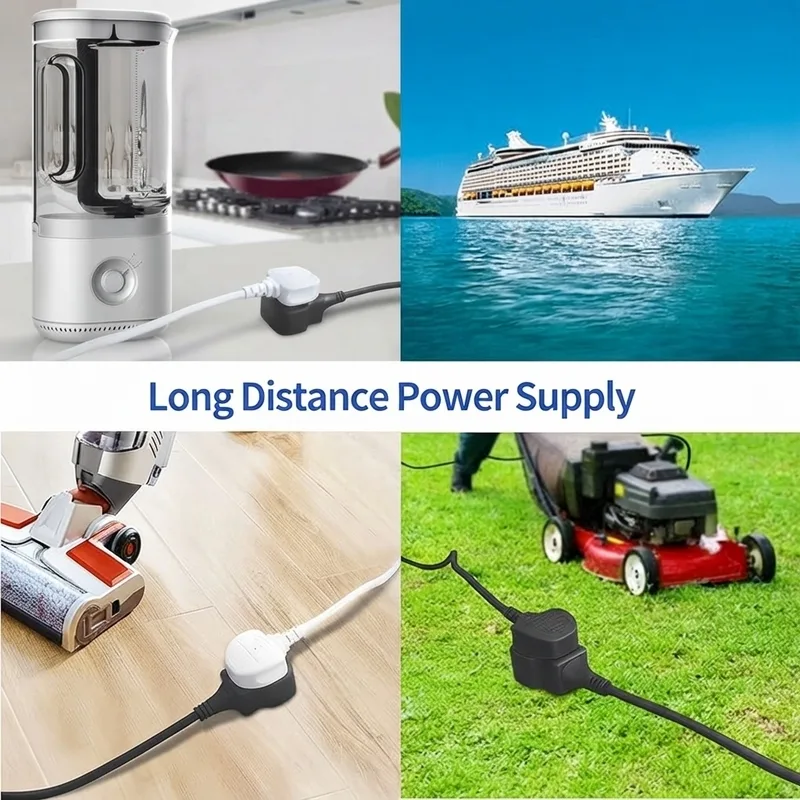
In the UK market, an extension lead is another common term for an extension cord.
UK extension leads can be produced with different cable sizes, lengths, socket configurations, plug options, and other specifications according to the intended application.
Cable Length Is an Important Difference
Length is one of the main considerations when choosing an extension cord.
A power cord is often specified according to the distance required between the equipment and the power source. An extension cord, on the other hand, is specifically intended to add extra reach.
For B2B purchasing, buyers may need different lengths for different markets or applications. Common customization options can include:
- Cable length
- Cable color
- Conductor size
- Cable construction
- Plug type
- Connector type
- Socket configuration
- Molded plug design
Choosing the correct length can help reduce unnecessary cable clutter while ensuring the connection can reach the required equipment location.
Power Rating and Cable Specification Matter
Cable length is not the only factor to consider. The electrical rating and cable construction must also be appropriate for the finished product and intended application.
Important specifications may include:
- Rated voltage
- Rated current
- Conductor material
- Conductor cross-sectional area
- Cable type
- Insulation material
- Outer jacket material
- Plug specification
- Connector specification
- Applicable certification requirements
For example, a power cord designed for IT equipment may use an IEC C13 connector, while a different application may require C5, C7, C19, or C20 configurations.
Similarly, extension cords may require different conductor sizes or socket configurations depending on their intended load and market requirements.
The exact current and voltage rating should always be confirmed according to the finished-product design, cable construction, connector, applicable national requirements, and product certification.
Power Cord and Extension Cord Applications Are Not Always the Same
Some electrical products can appear similar but serve different purposes.
A standard power cord may be specifically designed for one equipment connection, while an extension cord may be designed to provide additional reach.
For example:
Power Cord:
Wall outlet → Power cord → Computer
Extension Cord:
Wall outlet → Extension cord → Equipment power cord → Computer
This distinction is particularly important for B2B buyers because the required product configuration depends on how the cable will be integrated into the final electrical system.
How to Choose the Right Power Cord or Extension Cord
Before purchasing, buyers should consider several key factors.
1. Identify the Plug Type
Different markets use different plug standards, including UK, US, EU, Australian, Brazilian, and Italian configurations.
The plug should match the target market and intended power outlet.
2. Check the Connector
Equipment may require different connectors such as C5, C7, C13, C14, C19, or C20.
The connector should be compatible with the equipment inlet or power distribution system.
3. Confirm the Cable Specification
Cable size and construction should be selected according to the finished-product requirements.
For example, different applications may require different conductor sizes, insulation systems, jacket materials, or temperature ratings.
4. Select the Appropriate Length
For power cords, the length should suit the equipment setup.
For extension cords, the required distance between the outlet and equipment is particularly important.
5. Consider the Target Market
Certification and compliance requirements can vary by market.
A power cord intended for Australia may require different specifications from a UK, US, or European power cord. Buyers should confirm the applicable requirements for the specific finished-product configuration.
Custom Power Cords and Extension Cords for B2B Buyers
For distributors, wholesalers, importers, and electrical brands, standard products may not always match every market requirement.
A professional power cord manufacturer or extension cord supplier can provide OEM and ODM options covering different plug types, connector configurations, cable specifications, lengths, colors, and packaging requirements.
When sourcing from a power cord factory or extension cord manufacturer, buyers should confirm the finished-product specifications, applicable certification requirements, MOQ, and production schedule.
Customization may include:
- UK, US, EU, Australian and other plug types
- C5, C7, C13, C14, C19 and C20 configurations
- Cable length
- Cable color
- Conductor specification
- Wire gauge
- Plug and connector appearance
- Molded logo
- Product labeling
- Socket configuration
- Packaging
- Custom product development
For standard products, buyers can select an existing configuration. For customized projects, the final specification, MOQ, certification requirements, and production schedule should be confirmed according to the product design and target market.
Power Cord or Extension Cord: Which One Do You Need?
The answer depends mainly on the purpose of the cable.
If you need to connect equipment directly to a compatible power source, a power cord is generally the appropriate product.
If you need to increase the distance between an electrical outlet and the equipment, an extension cord may be more suitable.
For B2B sourcing, however, the decision should also consider the plug standard, connector type, cable construction, rated power, application environment, certification requirements, and target market.
Understanding these differences can help buyers select the correct electrical cable and avoid mismatched specifications during sourcing.
FAQ
Is a power cord the same as an extension cord?
No. A power cord is primarily designed to connect equipment to a power source, while an extension cord is designed to extend the reach of an existing electrical connection.
What is an IEC power cord?
An IEC power cord uses an IEC-standard connector configuration for compatible electrical equipment. Common configurations include C5, C7, C13, C14, C19, and C20.
What is a C13 power cord used for?
A C13 power cord is commonly used with compatible computers, monitors, servers, networking equipment, and other devices with a C14 power inlet.
What is an extension lead?
Extension lead is a common term for an extension cord, particularly in the UK and some other markets. The exact plug, socket, cable, and electrical specifications depend on the finished product.
Can power cords and extension cords be customized?
Yes. Depending on the manufacturer and product design, customization can include plug type, connector, cable length, conductor specification, cable color, socket configuration, molded logo, labeling, and packaging.
SEBLIP — Power Cord and Extension Cord Manufacturing
SEBLIP is a power cord manufacturer and extension cord supplier providing power connection solutions for distributors, wholesalers, importers, and electrical brands worldwide.. With over 20 years of manufacturing experience, SEBLIP supports power cords, extension cords, IEC power connections, and customized OEM & ODM projects for different markets and applications.
From standard power cords and extension cords to customized cable assemblies, SEBLIP supports flexible specifications, market-specific configurations, and factory-direct production.
Power Cords · Extension Cords · IEC Connectors · OEM & ODM · Factory Direct