
Power cords connect everyday electrical equipment to reliable power sources. From computers and household appliances to commercial equipment and industrial systems, the right power cord plays an important role in ensuring a stable and suitable electrical connection.
As cities continue to develop smarter buildings, expand digital infrastructure, and improve energy efficiency, the need for dependable electrical connections is becoming increasingly important. Power cords, extension cords, and power strips all support the operation and convenient use of electrical equipment in these environments.
Observed annually on October 31, World Cities Day draws attention to sustainable urban development, infrastructure improvement, and better living environments. Reliable electrical connections are part of this broader picture, supporting the buildings, workplaces, and digital systems that keep modern cities functioning.
For manufacturers, importers, and distributors, power cord quality, electrical safety, and product compliance remain important considerations when sourcing electrical accessories for international markets.

Why Power Cords Are Essential to Modern Urban Infrastructure
Modern cities rely on electrical equipment across almost every aspect of daily life. From residential buildings and office spaces to shopping centers, hospitals, and manufacturing facilities, electrical devices require suitable power connections to operate.
Power cords provide the connection between electrical equipment and power sources. Their conductor materials, wire sizes, insulation systems, connector designs, and rated electrical parameters all influence their suitability for different applications.
Common applications include:
- Residential Appliances: Power cords connect compatible household appliances, lighting equipment, and electronic devices to electrical outlets.
- Office Equipment: Computers, monitors, printers, and other office devices rely on appropriately rated power cords.
- Commercial Facilities: Retail stores, hotels, and business premises use power cords for various electrical and electronic equipment.
- Industrial Equipment: Compatible machinery, control equipment, and other electrical devices require power connections designed for their operating conditions.
- Digital Infrastructure: Servers, networking equipment, and communication devices depend on suitable power cords and connectors.
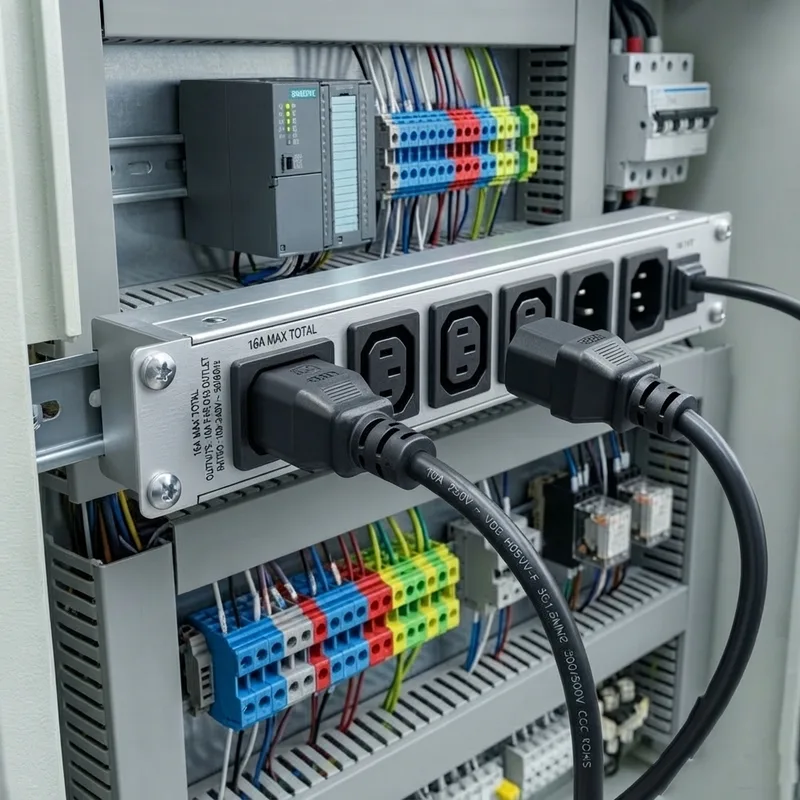
Power Cord Quality and Electrical Safety in Modern Buildings
Power cord quality directly affects electrical connection performance and product safety. For importers and distributors, evaluating a power cord involves more than checking its appearance or length.
Several technical factors deserve attention.
1. Conductor, Insulation, and Cable Jacket Materials
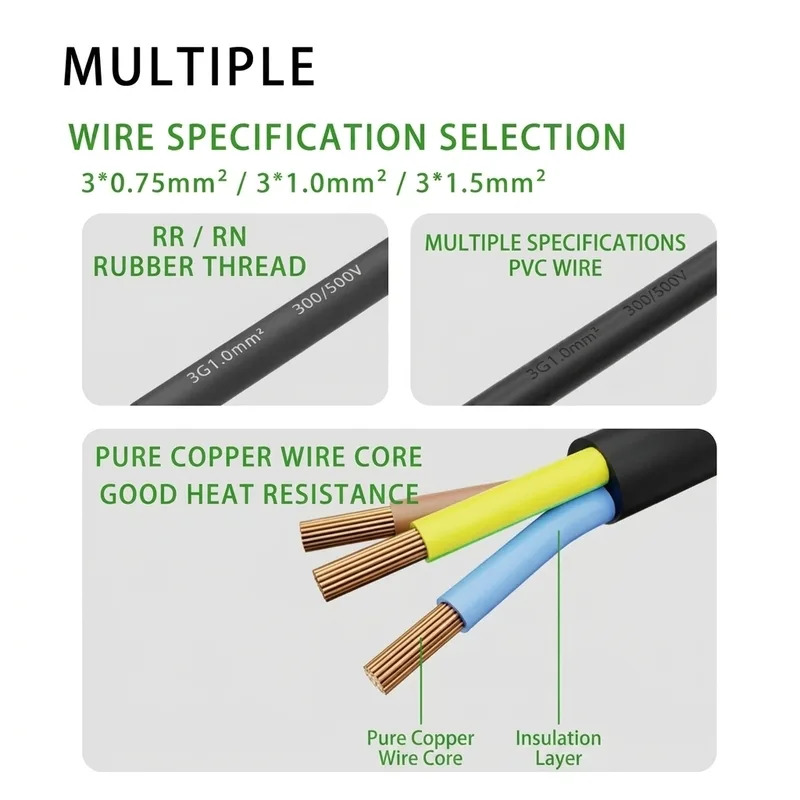
Power cord quality depends on both conductor specifications and insulation materials. Copper is widely used for its high electrical conductivity, while the conductor cross-sectional area must match the product’s rated current and intended operating conditions. An undersized conductor may increase electrical resistance and heat generation under load.
PVC is commonly used for cable insulation and outer jackets because of its electrical insulation properties, flexibility, and suitability for various applications. Other insulation materials may be selected according to temperature requirements, mechanical conditions, and applicable product standards. Buyers should verify conductor material, wire size, and material performance through technical specifications and relevant test documentation.
2. Plug and Connector Compatibility
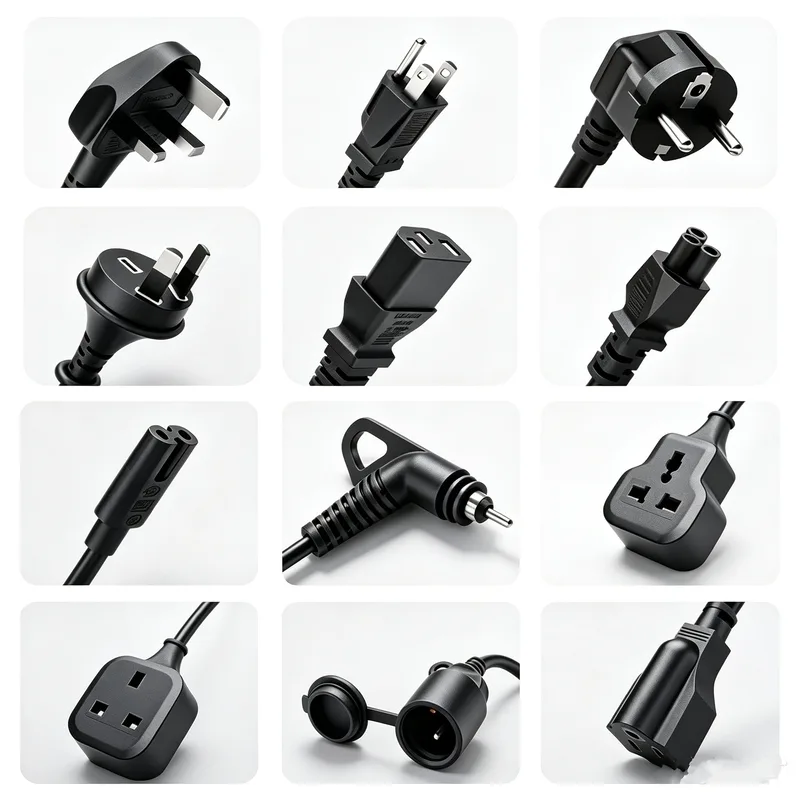
Power cords must use plugs and connectors that are compatible with the intended electrical equipment and target market.
Different countries have different plug and socket systems, including:
- US NEMA plug configurations.
- UK BS 1363 plugs.
- European Schuko and other European plug designs.
- Australian and New Zealand plug configurations.
- Brazilian NBR 14136 plug and socket systems.
For international buyers, checking plug dimensions, connector types, rated voltage, rated current, and applicable market requirements is essential.
3. Electrical Testing and Quality Inspection
Power cord manufacturers should establish appropriate quality control procedures throughout production.
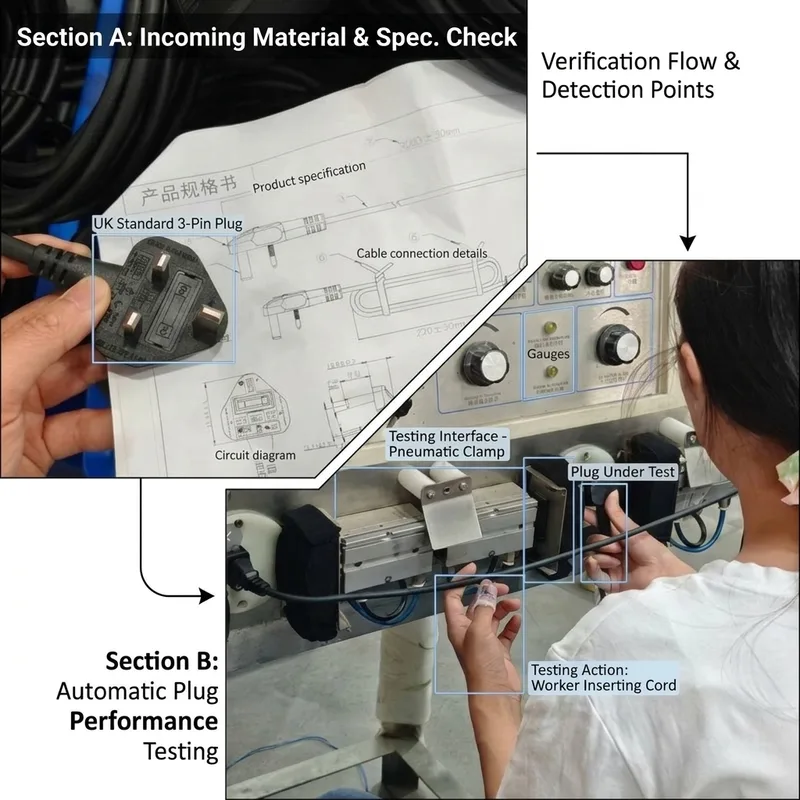
Depending on the product design and applicable requirements, inspection and testing may include continuity testing, insulation resistance testing, dielectric withstand testing, conductor verification, and visual inspection.
These procedures help identify manufacturing defects and verify that products meet their confirmed specifications.
Beyond Power Cords: Extension Cords and Power Strips in Urban Applications
Although power cords are the primary connection components for many electrical devices, extension cords and power strips provide additional flexibility in residential, office, and commercial environments.
Extension cords provide additional reach when fixed wall outlets are not conveniently located. They are available in different cable lengths, plug configurations, outlet arrangements, and electrical ratings.
Power strips allow multiple compatible electrical devices to connect to one power source. Depending on the model, they may include individual switches, overload protection, USB-A or USB-C charging ports, and other features.
Vertical tower power strips provide multiple outlets in a compact footprint, making them suitable for desks, home offices, and shared workspaces.
For all these products, users should follow the rated current and power capacity. Connecting too many high-power devices to one extension lead or power strip can cause overloading and excessive heat.
Product selection should always consider the intended application, electrical ratings, and relevant safety requirements.
How Power Cord Manufacturing Supports More Reliable Electrical Products
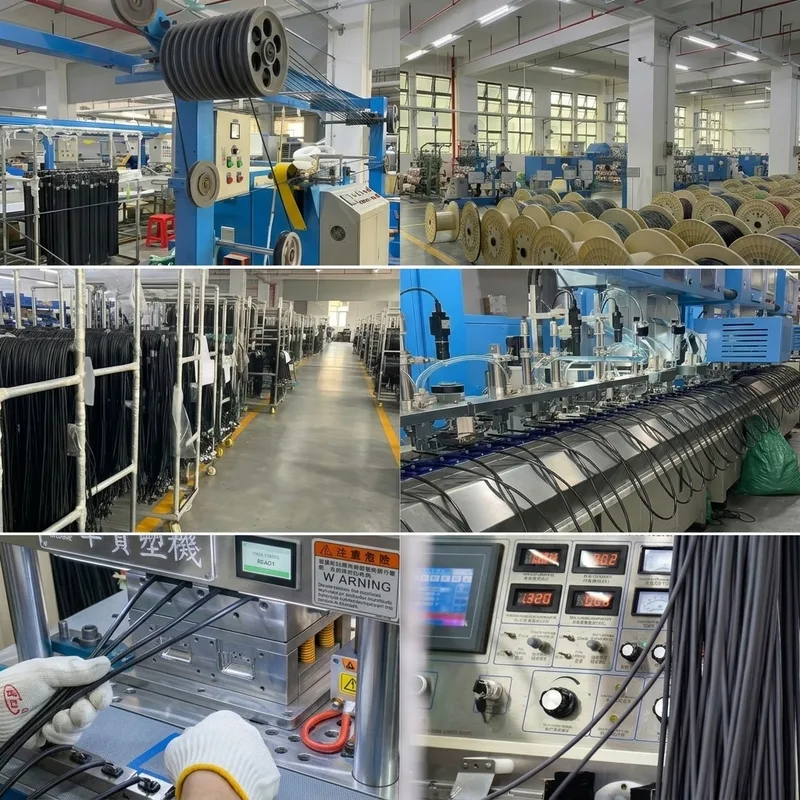
For power cord manufacturers, production involves several important stages:
- Wire Drawing: Copper wire is processed to achieve the required conductor diameter.
- Cable Production: Conductors are insulated and assembled according to the specified cable construction.
- Injection Molding: Plug bodies and other molded components are produced according to the product design.
- Plug and Connector Assembly: Cable assemblies are connected with compatible plugs and connectors.
- Electrical Testing: Products undergo applicable electrical tests and inspections.
- Final Inspection and Packaging: Finished products are checked against confirmed specifications before shipment.
A power cord’s reliability is influenced not only by its materials and design but also by how consistently it is manufactured. From copper wire processing to plug molding, assembly, and electrical testing, each production stage affects the finished cable assembly.
SEBLIP: Power Cord Manufacturer for Global Markets
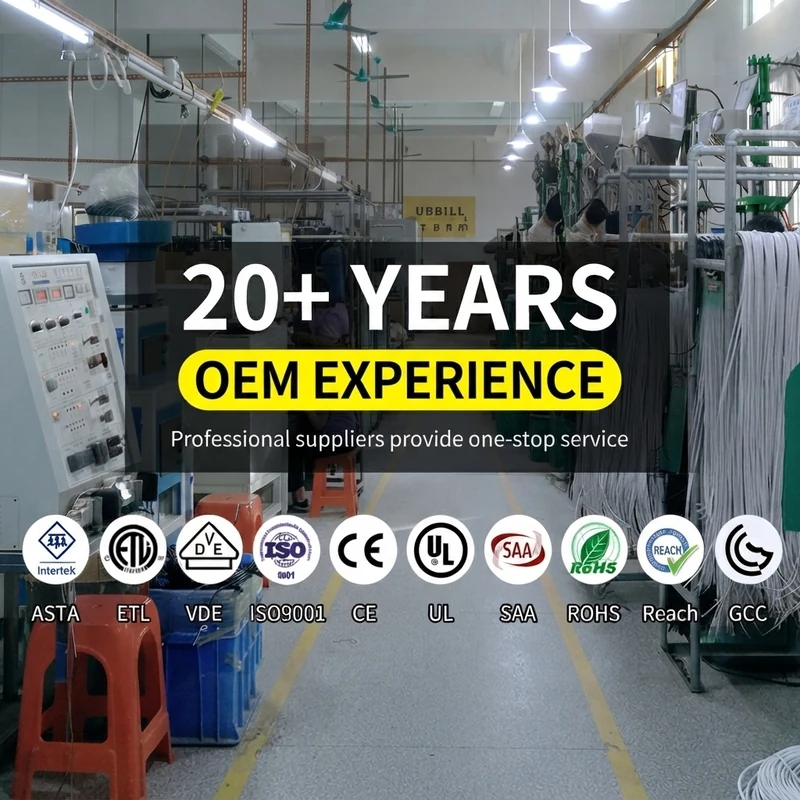
At SEBLIP, we specialize in manufacturing power cords and electrical accessories for international markets. With over 20 years of manufacturing experience and a 40,000 m² manufacturing facility in Dongguan, China, we serve importers, distributors, and OEM/ODM customers worldwide.
Our product range includes:
- US, UK, EU, Australian, and other international standard power cords.
- IEC power cords, including C5, C7, C13, C15, and C19 configurations.
- Extension cords and multi-socket power strips.
- Tower power strips with different outlet configurations.
- Power adapters and plug components.
Our integrated manufacturing processes cover wire drawing, cable production, injection molding, plug assembly, electrical testing, quality inspection, and final packaging.
By handling key production stages in-house, we can coordinate cable specifications, plug configurations, and finished cord assembly more closely during OEM and ODM projects.
OEM and ODM Power Cord Customization
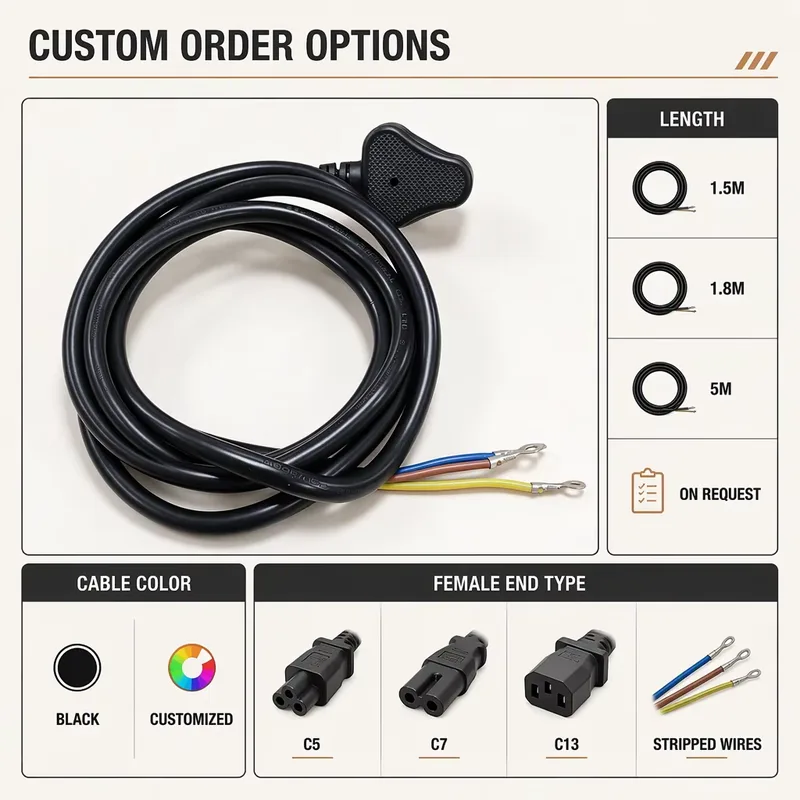
Different markets and equipment applications require different power cord specifications. SEBLIP supports customization options including:
- Plug types and plug designs for different international markets.
- Cable lengths, colors, and conductor specifications.
- PVC cable constructions and wire configurations.
- IEC connector types and customized cable-end terminations.
- Logo printing, product labeling, and packaging.
Our team works with customers to confirm suitable product configurations based on their technical requirements and target markets.
Quality Control and Market Requirements
Power cord specifications and compliance requirements vary by product model and destination market. Applicable certifications and supporting documentation may include CE, RoHS, ETL, VDE, SAA, PSE, and other market-specific requirements, depending on the product.
Through integrated manufacturing capabilities, production quality control, and flexible OEM/ODM services, SEBLIP supports customers seeking a reliable long-term power cord manufacturing partner.
Conclusion
Modern buildings, offices, and industrial facilities all depend on suitable electrical connections. Power cords remain a fundamental part of this infrastructure, while extension cords and power strips provide additional flexibility for different applications.
As a power cord manufacturer with over 20 years of experience, SEBLIP continues to support global customers with a range of power cords and electrical accessories. Through integrated manufacturing and OEM/ODM customization, we work with importers, distributors, and brand owners to develop products that meet their specifications and target-market requirements.