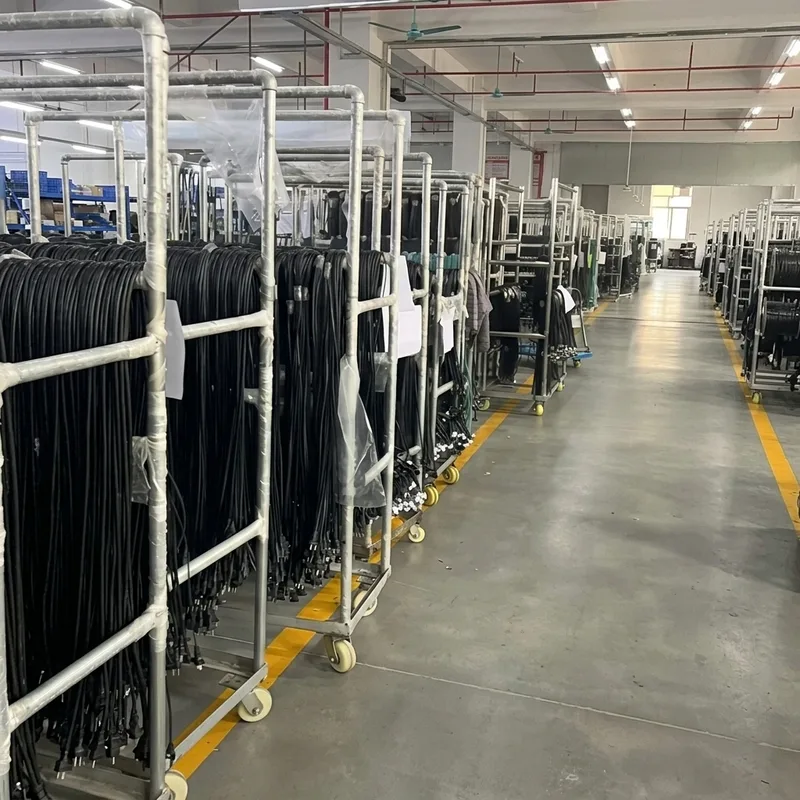
Copper is one of the most important raw materials in electrical wire and cable manufacturing. From household power cords and extension leads to industrial cables, copper conductors directly influence material costs, electrical performance, and manufacturing expenses.
In November 2026, movements in China’s copper market continue to attract attention from wire and cable manufacturers. Recent market updates from Shanghai Metals Market (SMM) show that changes in copper prices, available inventories, and downstream purchasing activity are influencing spot market transactions.
On November 3, SMM reported that copper inventories in Guangdong declined again, while suppliers maintained firm quotations amid tighter available supply. Despite the lower copper price environment, downstream purchasing activity remained relatively cautious because spot premiums were high.
For international power cord buyers, this highlights an important point: a decline in copper prices does not necessarily mean that the overall cost of copper procurement or finished power cords will fall immediately.
This article examines recent copper market developments, their potential impact on cable manufacturing costs, and what importers, distributors, and OEM buyers should consider when sourcing power cords in 2026.
How Copper Price Fluctuations Affect Cable Manufacturing Costs
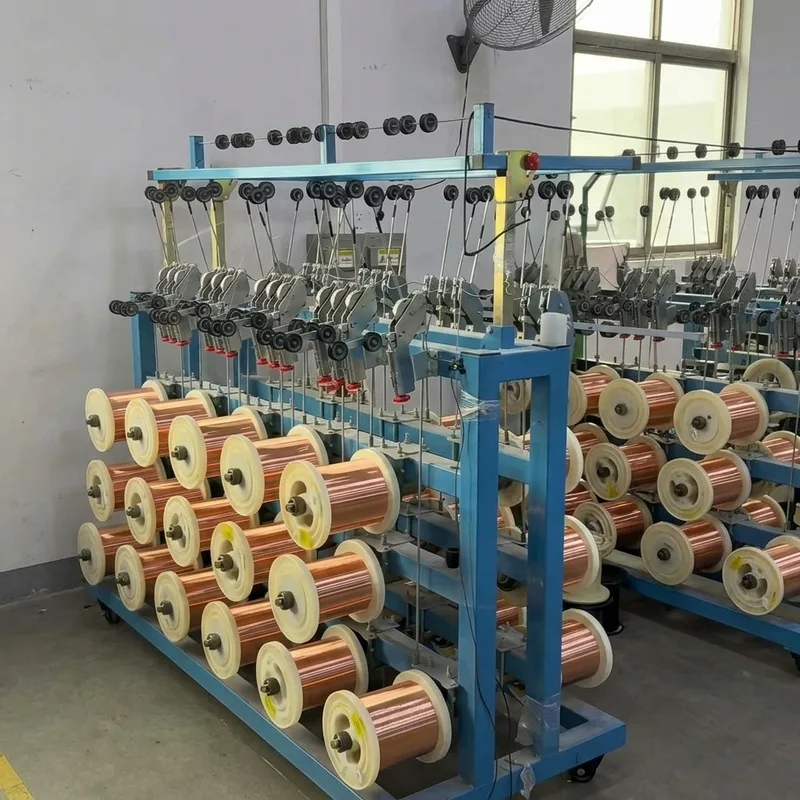
Copper conductors are widely used in power cords because of their electrical conductivity and suitability for different cable configurations.
When copper prices change, manufacturers may need to reassess raw material purchasing costs and production quotations. The impact depends on the amount of copper used in each cable specification, existing inventory, and the timing of material purchases.
Several factors determine how copper price movements affect cable manufacturing costs.
Conductor Size and Copper Content
The conductor cross-sectional area directly affects the amount of copper required for a cable.
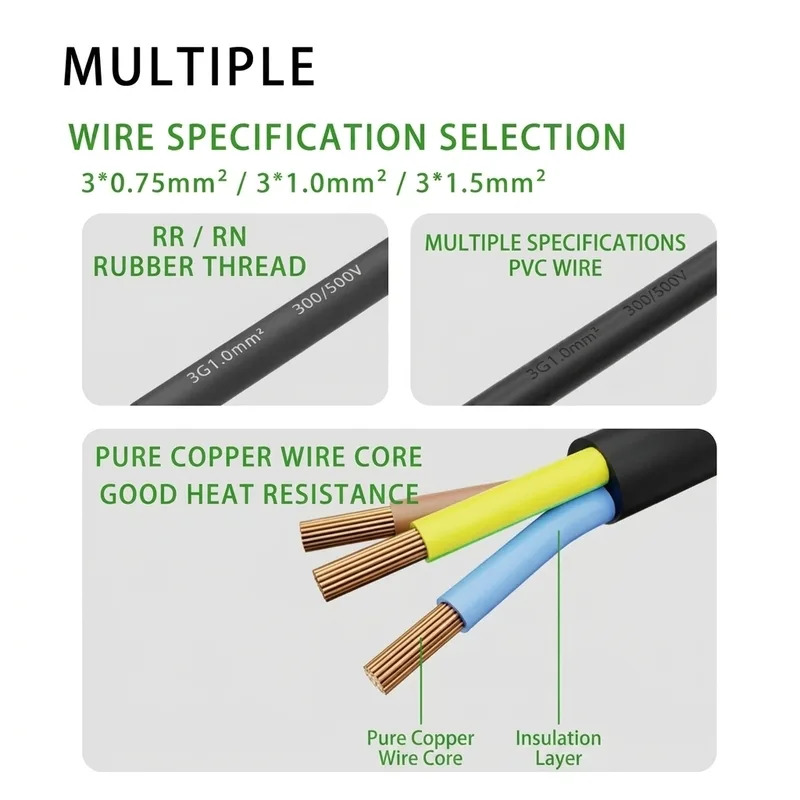
For example, a 3-core cable with 1.5 mm² conductors generally requires more copper than a 2-core cable with 0.75 mm² conductors of the same length.
Cable length, number of cores, and conductor construction also influence total copper consumption. Therefore, two power cords with different specifications may experience different material cost impacts even when copper market prices move by the same amount.
Raw Material Purchasing Timing
Manufacturers may purchase copper at different market price levels depending on their procurement schedules and inventory positions.
As a result, changes in market prices may not be reflected immediately in the cost of every production order. Existing raw material stocks, supplier agreements, and new purchasing requirements all influence the timing of cost adjustments.
Production Volume
Large production orders require greater quantities of copper and other raw materials. When prices are volatile, manufacturers need to coordinate purchasing quantities with confirmed orders and expected production demand.
Quotation Validity
When copper prices fluctuate significantly, manufacturers may need to review quotation validity periods more frequently.
For international buyers, confirming the quotation period and material pricing arrangements before placing an order can help avoid misunderstandings during production.
Why Copper Inventory and Spot Premiums Matter to Buyers
Copper futures prices are only one part of the procurement picture. Physical copper availability and spot premiums can also influence the cost of raw materials purchased by cable manufacturers.
SMM’s October 31 analysis reported that China’s mainstream regional copper cathode social inventory had fallen to 66,900 metric tons as of October 29, down 24,700 metric tons week over week.
The same report highlighted that limited available supply and elevated spot premiums were affecting downstream purchasing decisions. Although lower inventories supported supplier quotations, high copper prices and premiums also made some downstream buyers more cautious about replenishing materials.
This creates a more complicated purchasing environment:
- When physical copper supply becomes tighter, spot premiums may increase even if futures prices decline.
- When copper prices rise rapidly, some downstream buyers may delay purchases or reduce inventory commitments.
- When prices temporarily decline, some buyers may replenish materials or release delayed orders.
- When both prices and premiums remain high, buyers may focus on essential procurement rather than building additional inventory.
For power cord manufacturers, these conditions can influence copper purchasing decisions and production cost calculations.
For importers and distributors, monitoring both copper prices and physical market conditions provides a more complete picture of potential supply cost changes.
Source: SMM – Low Inventory and High Premiums Resonate, High Copper Prices Backfire on Restocking.
What Power Cord Buyers Should Consider When Sourcing in 2026
Copper price fluctuations are important, but they should not be the only factor in supplier selection. International buyers also need to evaluate conductor specifications, manufacturing capabilities, product compliance, and delivery arrangements.
Here are five considerations for B2B power cord sourcing.
1. Confirm the Conductor Material
Check whether the power cord uses pure copper conductors or another specified conductor material.
Ask suppliers to provide clear material specifications rather than relying only on general descriptions such as high conductivity or premium copper.
2. Verify Wire Gauge and Cross-Sectional Area
Confirm the required conductor size, such as 0.75 mm², 1.0 mm², or 1.5 mm², according to the product design, rated current, applicable standards, and intended application.
The conductor specification should match the electrical requirements of the finished power cord.
3. Evaluate Manufacturing Capabilities
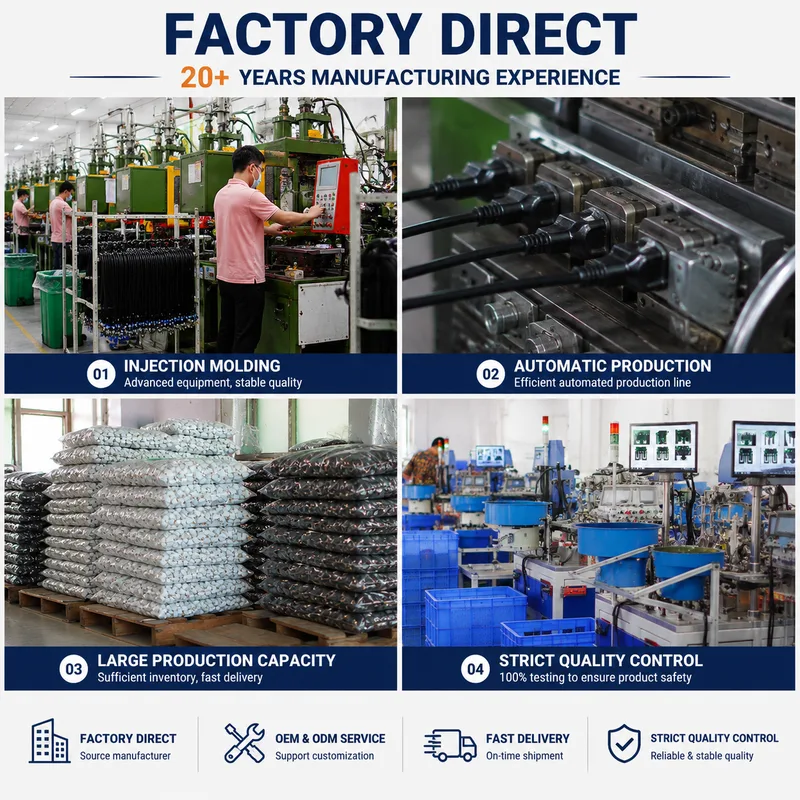
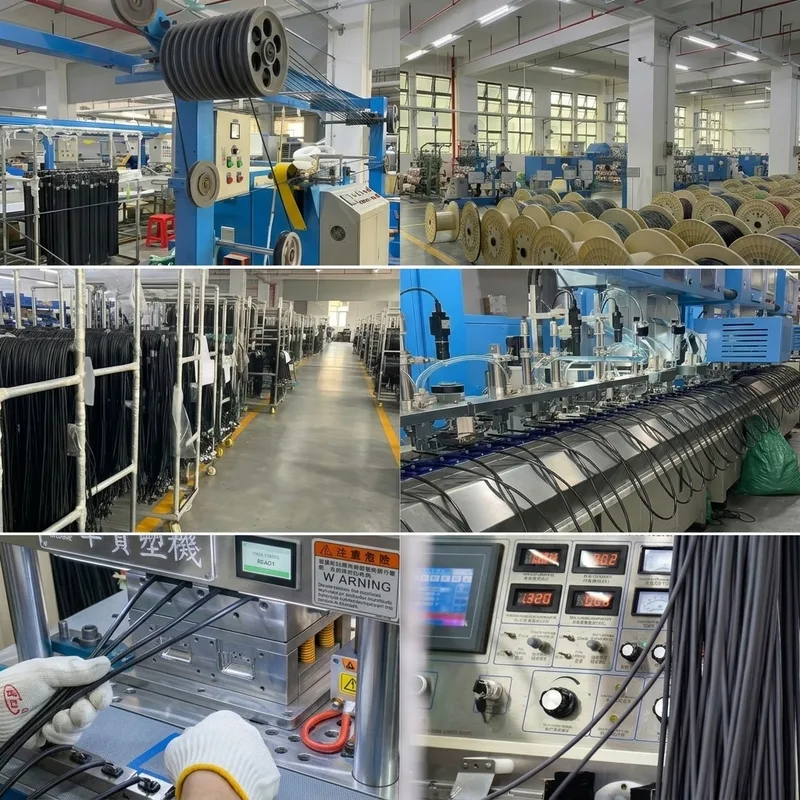
A manufacturer with integrated production capabilities can coordinate multiple manufacturing stages, including wire processing, cable production, injection molding, plug assembly, and electrical testing.
This can help improve production coordination and maintain consistency across different product components.
4. Review Product Testing and Compliance
Check relevant electrical test records, product certifications, and market-specific compliance requirements.
Requirements differ across the UK, EU, US, Australia, Brazil, and other markets. Buyers should verify that the certification documents cover the actual plug, cable configuration, and finished product being purchased.
5. Compare Total Procurement Value
The lowest quotation does not always represent the best sourcing decision.
Buyers should consider conductor material, wire specifications, insulation materials, manufacturing quality, testing procedures, customization capabilities, and delivery arrangements together.
A reliable manufacturing partner can help buyers manage sourcing uncertainty while maintaining consistent product requirements.
SEBLIP Power Cord Manufacturing and OEM/ODM Supply
With over 20 years of manufacturing experience and a 40,000 m² manufacturing facility, SEBLIP supplies power cords and electrical connection products for international B2B customers.
Our integrated manufacturing capabilities cover wire drawing, copper wire processing, cable production, injection molding, plug assembly, electrical testing, and quality inspection.
We manufacture and supply a wide range of electrical products, including:
- Power Cords: Various specifications, plug standards, conductor sizes, cable materials, and connector configurations for different markets and applications.
- Extension Cords: Different cable lengths, outlet configurations, plug types, and customized designs.
- Power Strips: Multiple outlet configurations, individual switches, tower designs, and USB charging options.
- Plugs: Various plug types, designs, and components for different national standards and electrical applications.
- IEC Connectors: C5, C7, C13, C14, C15, and C19 connector configurations for computers, monitors, servers, and other electrical equipment.
SEBLIP supports OEM and ODM customization based on customer requirements, including conductor specifications, cable materials, plug designs, cable lengths, colors, and private-label branding.
Explore our power cord manufacturing range to find suitable products for your sourcing requirements.
Looking for a Reliable Power Cord Manufacturer?
Choosing a suitable power cord supplier involves more than comparing current material prices. Product specifications, manufacturing capabilities, quality control, and order coordination all contribute to long-term sourcing decisions.
Contact SEBLIP to discuss your power cord specifications, material requirements, OEM/ODM projects, and wholesale orders.