
Choosing the right power cord manufacturer is important for distributors, wholesalers, importers, electrical brands, and equipment manufacturers.A reliable supplier should provide consistent power cords, suitable certifications, customization support, and stable delivery..
When comparing power cord suppliers, buyers should look beyond price and evaluate the manufacturer’s factory capabilities, product range, quality control, and long-term supply capacity.
Check the Manufacturer’s Factory and Experience
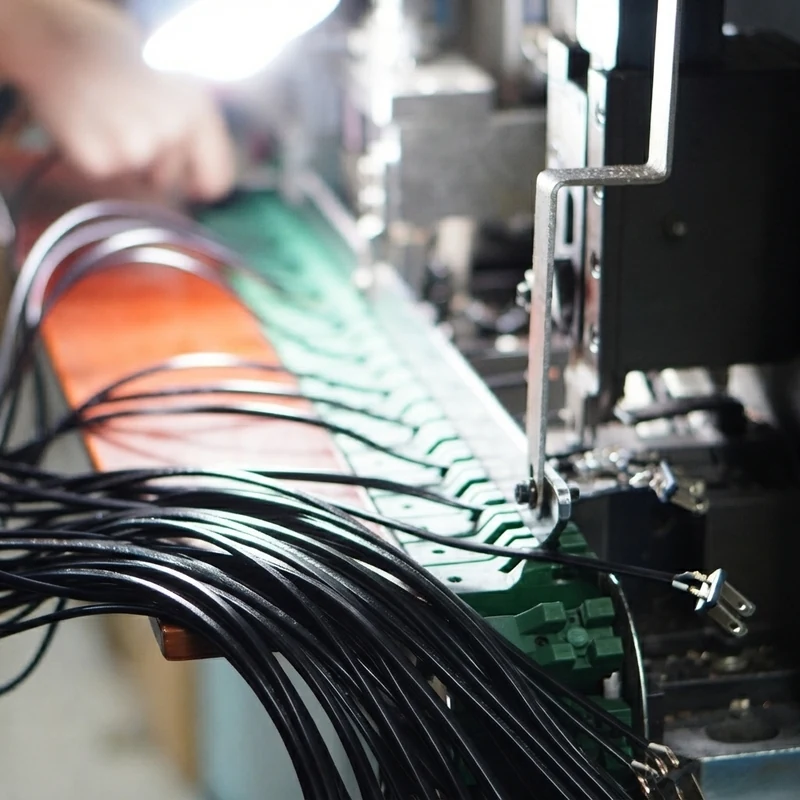
The first step is to determine whether the supplier is a direct manufacturer or mainly a trading company.
A reliable power cord factory should be able to provide clear information about its manufacturing facility, production equipment, assembly processes, quality control, and product development capabilities.
Buyers can check:
- Factory and production facilities
- Injection molding and cable processing equipment
- Assembly and inspection processes
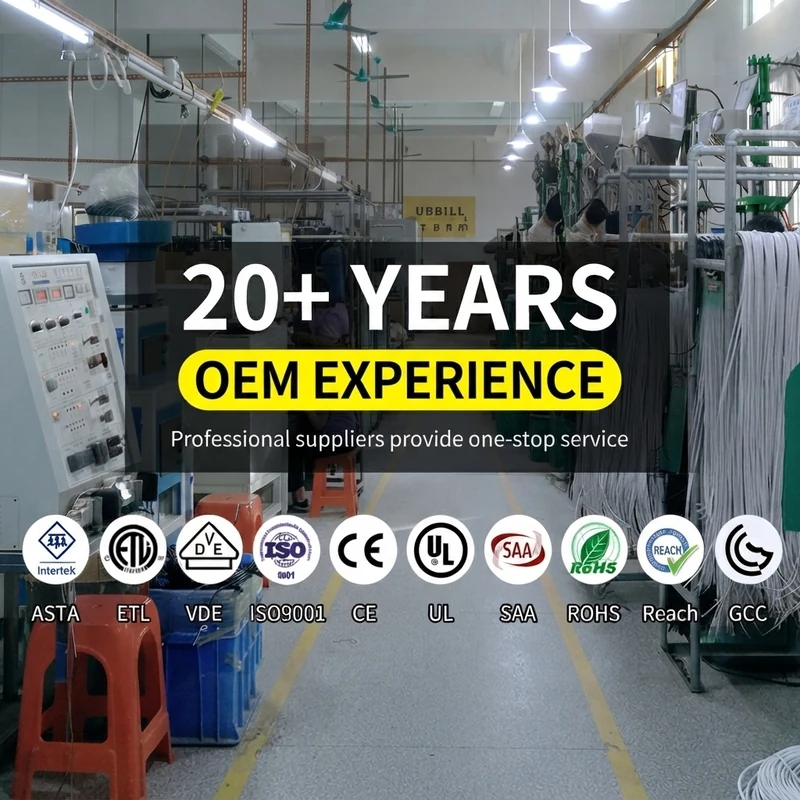
- Manufacturing experience
- Production capacity
- Quality control capabilities
Manufacturing experience alone does not guarantee product quality, but an established factory with organized production and quality systems can provide better support for long-term B2B sourcing.
Check the Power Cord Product Range
A suitable power cord supplier should have products that match your current and future sourcing requirements.
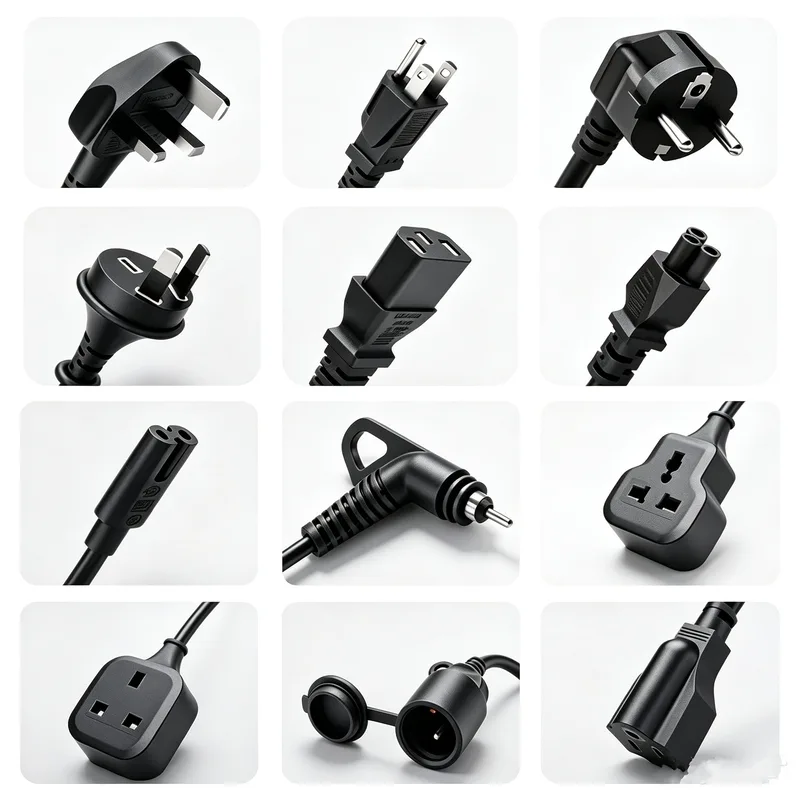
Depending on the target market and application, buyers may need:
- IEC C5 power cords
- IEC C7 power cords
- C13-C14 power cords
- C14-C15 power cords
- C19-C20 power cords
- US power cords
- UK power cords
- EU power cords
- Australian power cords
- Extension cords
- Power strips
- Power connectors and plug components
A manufacturer with a wider product range can make it easier for distributors and importers to source different electrical products from one supplier.
For international B2B buyers, it is also important to confirm that the manufacturer understands different plug standards, cable specifications, current ratings, and market requirements.
Evaluate OEM & ODM Customization Capability
Standard products may not always meet the requirements of electrical brands or distributors.
A professional custom power cord manufacturer should be able to adjust product specifications according to the project requirements.
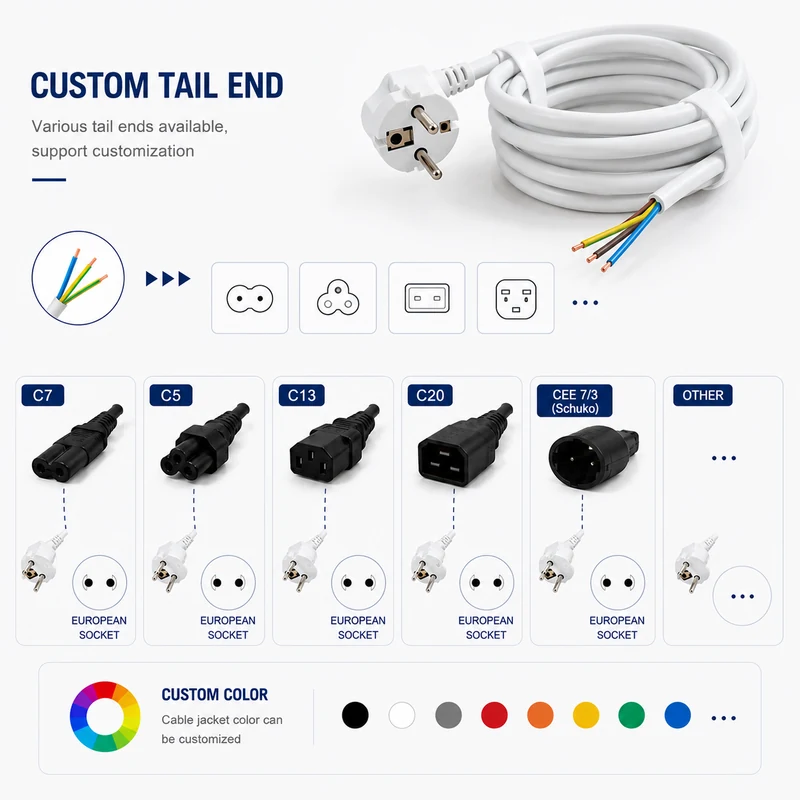
Customization may include:
- Cable length
- Cable color
- Wire gauge and conductor specification
- Plug type
- Connector type
- Cable construction
- Logo and cable marking
- Product labeling
- Packaging
For OEM and ODM projects, buyers should also ask whether the manufacturer can develop products according to drawings, samples, or technical specifications.
Good communication during sample development can help reduce production errors and ensure that the final product matches the approved specifications.
Check Quality Control and Certifications
Quality control is an important factor when choosing a power cord manufacturer.
Depending on the product, manufacturing quality control may include:
- Raw material inspection
- Component inspection
- Conductor and terminal inspection
- Assembly inspection
- Continuity testing
- High-voltage testing
- Visual inspection
- Finished-product inspection
Buyers should also confirm the certifications and standards applicable to the specific product and target market.
Depending on the configuration, requirements may include CE, RoHS, ETL, VDE, SAA, UKCA, or applicable IEC and national standards.
Certification should always be confirmed for the specific finished product rather than assuming that one certification applies to every product from a supplier.

Confirm MOQ, Samples and Lead Time
Before placing an order, buyers should confirm the supplier’s MOQ, sample policy, and production lead time.
Important questions include:
- What is the standard MOQ?
- Are samples available?
- Who pays the sample shipping cost?
- Can products be developed from drawings or samples?
- What is the standard production lead time?
- What is the lead time for customized products?
For SEBLIP, the standard MOQ is 100 pieces, while customized MOQ may vary according to the product specifications and production requirements.
Samples are available for product evaluation, with the buyer responsible for shipping costs.
For in-stock products, shipping can generally be arranged within approximately 7 days. Customized products generally require around 25–30 days, depending on the specifications and production conditions.
Actual lead times should be confirmed for each order before production.
Consider Long-Term Supply Capability
For B2B buyers, choosing a supplier is not only about the first order.
A reliable power cord supplier should be able to maintain consistent product specifications across repeat orders.
Buyers should consider whether the manufacturer can maintain consistency in:
- Materials
- Cable specifications
- Connector configuration
- Product dimensions
- Electrical ratings
- Product appearance
- Packaging
- Quality requirements
Clear technical communication is also important when specifications change or new products need to be developed.
A stable manufacturing relationship can help distributors, wholesalers, importers, and electrical brands manage repeat orders more efficiently.
Why Choose SEBLIP as Your Power Cord Manufacturer?
SEBLIP supplies power cords, extension cords, power strips, power connectors, and plug components for international B2B customers.
We support OEM and ODM customization, including cable specifications, lengths, colors, plug and connector configurations, product markings, and packaging.
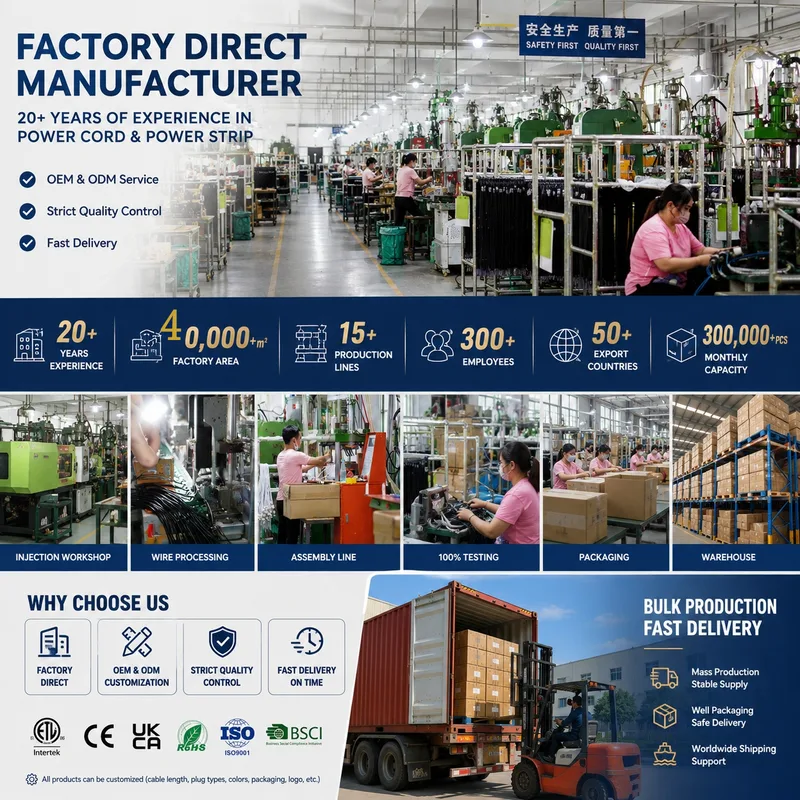
With 20+ years of manufacturing experience and a 40,000 m² manufacturing facility, SEBLIP supports projects from component development and injection molding to cable processing, assembly, quality inspection, and finished-product production.
Whether you need standard IEC, US, UK, EU, or Australian power cords or customized cable solutions, SEBLIP provides factory-direct support for distributors, wholesalers, importers, and electrical brands.
Conclusion
Choosing a reliable power cord manufacturer requires more than comparing prices.
B2B buyers should evaluate the supplier’s:
Manufacturing Capability + Product Range + Quality Control + Certifications + OEM & ODM Support + Lead Time + Long-Term Supply Capability
By checking these factors before placing an order, buyers can better understand whether a supplier is suitable for their product requirements and long-term sourcing needs.