
Published by SEBLIP | Updated: September 2026
Category: Power Cords / IEC Connectors / B2B Sourcing
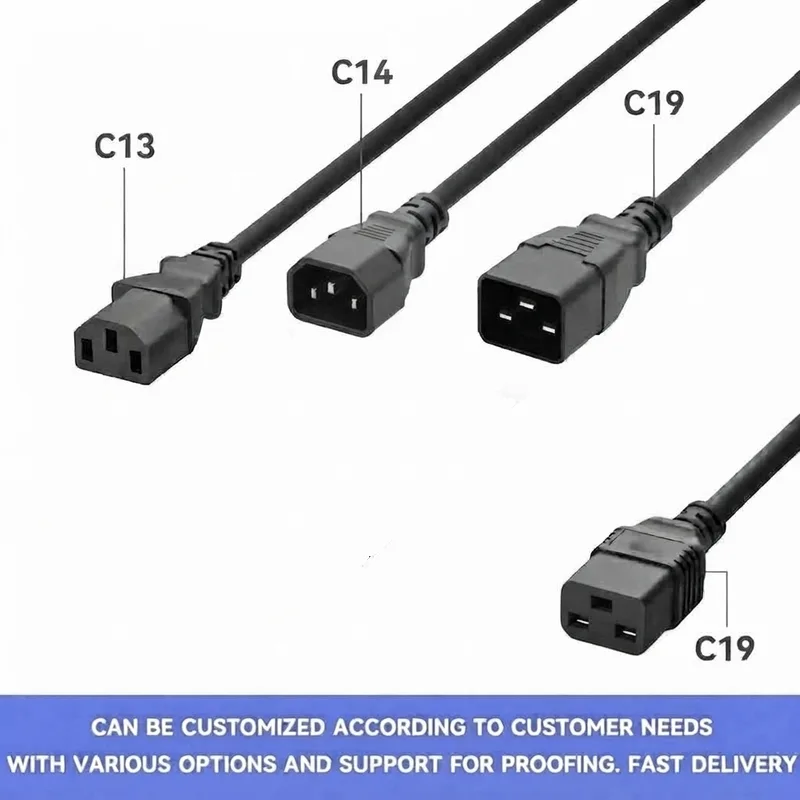
When sourcing power cords for computers, servers, networking equipment, and other electrical devices, buyers often come across terms such as C13, C14, C19, and C20. Although these IEC connector numbers look similar, they serve different connection roles and are designed for different power requirements.
Understanding the difference between C13-C14 power cords and C19-C20 power cords can help distributors, system integrators, and equipment manufacturers select the right cable for their applications.
What Are C13-C14 power cord ?
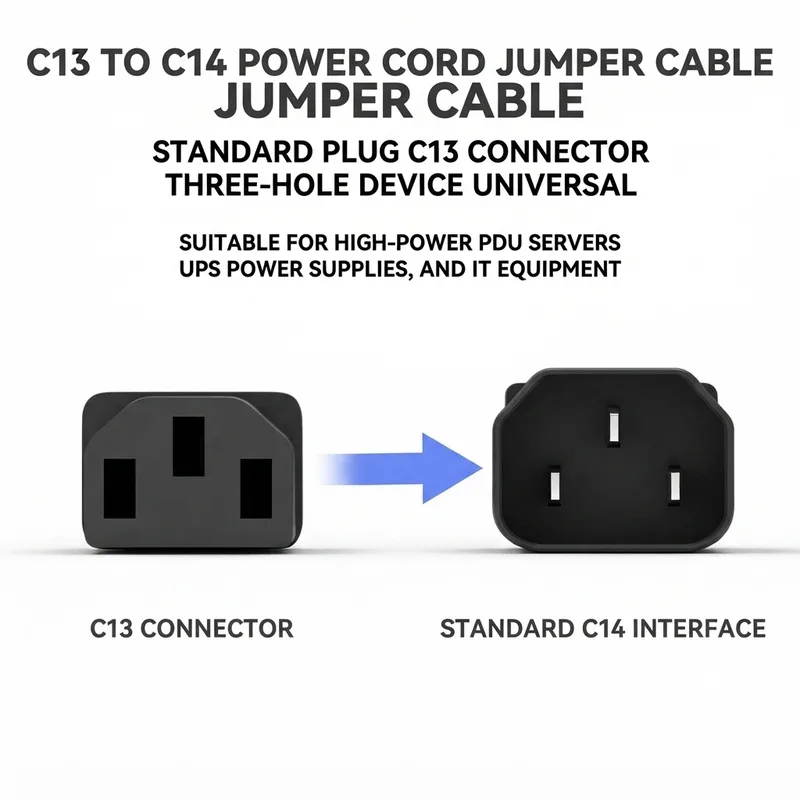
IEC C13 and C14 are commonly used appliance couplers for computers, monitors, servers, printers, and other electronic equipment.
The C13 connector is typically the female connector on the power cord, while the C14 inlet is the corresponding male appliance inlet mounted on compatible equipment.
A typical C13-C14 power cord connects equipment to a PDU, UPS, power distribution system, or other compatible power source.
For example:
Power source / PDU → C13-C14 power cord → C14 equipment inlet
C13-C14 cables are widely used where standard power requirements are sufficient, including office equipment, IT equipment, computer systems, and certain networking devices.
What Are C19-C20 power cord?
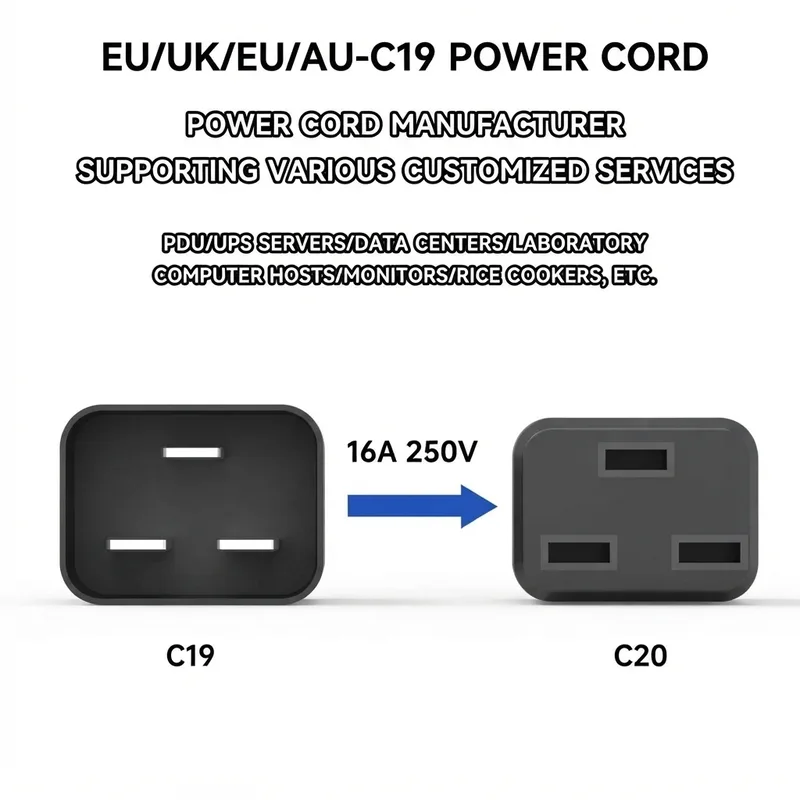
IEC C19 and C20 are another pair of appliance couplers within the IEC 60320 family.
The C19 connector is the female connector commonly installed on the power cord, while the C20 inlet is the corresponding male inlet on compatible equipment.
Compared with C13-C14 connections, C19-C20 systems are commonly selected for equipment requiring higher current capacity.
A typical connection can be arranged as:
PDU / power distribution system → C19-C20 power cord → C20 equipment inlet
C19-C20 power cords are frequently used with higher-power IT and electrical equipment, including servers, data-center hardware, UPS systems, and other professional equipment.
C13-C14 power cord vs. C19-C20 power cord: What Is the Difference?
| Feature | C13-C14 | C19-C20 |
|---|---|---|
| Connector pair | C13 + C14 | C19 + C20 |
| Typical role | Standard equipment power connection | Higher-power equipment connection |
| Common applications | Computers, monitors, printers, IT equipment | Servers, UPS, data-center equipment |
| Typical current range | Often up to 10A depending on configuration | Often up to 16A depending on configuration |
| Connection size | More compact | Larger |
| Typical B2B use | Office and general IT equipment | Data centers and high-power IT systems |
The exact current and voltage rating should always be confirmed according to the specific connector, cable construction, national requirements, and finished-product certification. IEC 60320-1 provides general requirements for appliance couplers and specifies a general scope up to 250V AC and 16A; individual connector types and applications have their own applicable requirements.
Why Choose C13-C14 power cord?
C13-C14 power cords are a practical choice for many standard IT and electronic equipment applications.
They are commonly used for:
- Desktop computers
- Monitors
- Printers
- Servers
- Networking equipment
- Office equipment
- PDU and UPS connections
For B2B buyers, C13-C14 cords are also convenient for standard power distribution applications where a compact IEC connection is required.
SEBLIP offers C13-C14 power cords with options such as pure copper conductors, PVC jackets, different cable lengths, and specifications for different market requirements.
When Should You Consider C19-C20 power cord?
C19-C20 power cords are generally used when equipment requires a higher-current IEC connection.
Typical applications include:
- Data center servers
- High-performance IT equipment
- UPS systems
- Professional networking equipment
- Power distribution units
- Enterprise infrastructure
The larger C19/C20 connection is designed for applications where a higher-power connection is required compared with the common C13/C14 configuration.
SEBLIP supplies C19-C20 power cords designed for professional IT and power distribution applications, with options including pure copper conductors, flexible PVC jackets, cable lengths, and customized specifications.
C13-C14 power cord or C19-C20 power cord: Which One Should You Choose?
The choice should not be based simply on connector size. Buyers should first check the equipment inlet, rated current, rated voltage, cable specification, and applicable safety requirements.
Choose a C13-C14 power cord when:
- The equipment uses a C14 inlet.
- Standard IT or office equipment is being powered.
- The required current rating is suitable for a C13/C14 connection.
- A compact and widely used IEC connection is preferred.
Consider a C19-C20 power cord when:
- The equipment uses a C20 inlet.
- The application requires a higher-current IEC connection.
- The cable is intended for servers, UPS systems, or data-center infrastructure.
- A larger IEC connector configuration is required.
In other words, the equipment inlet should determine the compatible connector pair. A C13 cable should not be substituted for a C19 cable simply because the physical connection appears similar.
C13-C14 power cord and C19-C20 power cord for Data Center Applications
Data centers often contain different types of equipment with different power requirements. A single server room may therefore use both C13-C14 and C19-C20 power connections.
C13-C14 connections are commonly found on standard IT equipment, while C19-C20 connections can be used for higher-power servers, UPS systems, PDUs, and other infrastructure.
For data-center buyers, selecting the correct IEC power cord involves more than choosing the connector type. Cable conductor size, current rating, length, jacket material, plug type, and applicable certifications should also be considered.
What Should B2B Buyers Check Before Ordering?
Before placing a bulk order, buyers should confirm:
1. Connector Type
Confirm whether the equipment requires C13/C14 or C19/C20.
2. Current and Voltage Rating
Check the equipment requirements and select a cable with an appropriate rating.
3. Conductor Specification
Copper conductor size should match the intended application and required current.
4. Cable Length
Choose the correct length to avoid unnecessary cable management problems.
5. Plug Configuration
The wall-side plug or power-source connector may vary according to the target market.
6. Certification Requirements
Certification and compliance requirements should be confirmed according to the destination market and finished product configuration.
7. Customization Requirements
For OEM projects, buyers can specify cable length, conductor size, jacket color, plug type, labeling, packaging, and other requirements.
SEBLIP C13-C14 power cord and C19-C20 Power Cord Solutions
SEBLIP provides C13-C14 and C19-C20 power cord solutions for global B2B customers.
Our C13-C14 power cords are designed for computers, monitors, servers, networking equipment, and other standard IT applications. Our C19-C20 power cords are designed for higher-power applications such as servers, UPS systems, PDUs, and data-center infrastructure.
With over 20 years of manufacturing experience, SEBLIP supports OEM and ODM requirements including cable length, conductor specification, plug configuration, jacket color, labeling, and packaging.
For buyers sourcing IEC power cords in bulk, choosing the correct connector pair and cable specification is an important step toward reliable equipment power connections.
Frequently Asked Questions
Are C13 and C14 the same connector?
No. C13 and C14 are complementary parts of an IEC appliance connection. C13 is commonly used on the power cord, while C14 is the corresponding appliance inlet.
What is the difference between C13-C14 and C19-C20?
C13-C14 is commonly used for standard IT and electronic equipment, while C19-C20 is generally used for higher-power equipment and professional infrastructure.
Can I use a C13-C14 cable instead of a C19-C20 cable?
Not normally. The equipment inlet determines the compatible connector type. Always confirm the equipment specification before selecting a replacement power cord.
Are C19-C20 cables suitable for data centers?
Yes. C19-C20 connections are commonly used in data-center and enterprise IT environments, particularly for servers, UPS systems, PDUs, and other higher-power equipment.
Can SEBLIP customize C13-C14 and C19-C20 power cords?
Yes. SEBLIP supports OEM and ODM customization, including cable length, conductor specification, plug type, jacket color, labeling, packaging, and other requirements.
Conclusion
Understanding the difference between C13-C14 and C19-C20 power cords makes it easier to select the correct IEC connection for different IT and electrical applications.
C13-C14 is widely used for standard computer and electronic equipment, while C19-C20 is commonly selected for higher-power servers, UPS systems, PDUs, and data-center infrastructure.
For B2B sourcing, the correct choice should always be based on the equipment inlet, current and voltage requirements, cable specification, and applicable market standards.
SEBLIP provides both C13-C14 and C19-C20 power cords, together with OEM/ODM support for global distributors, wholesalers, system integrators, and equipment manufacturers.