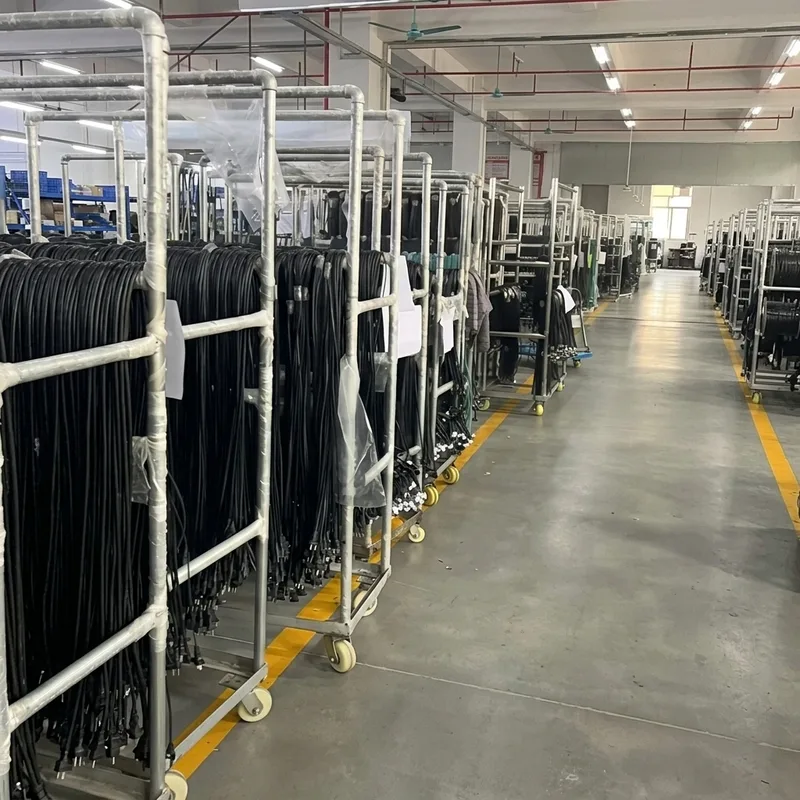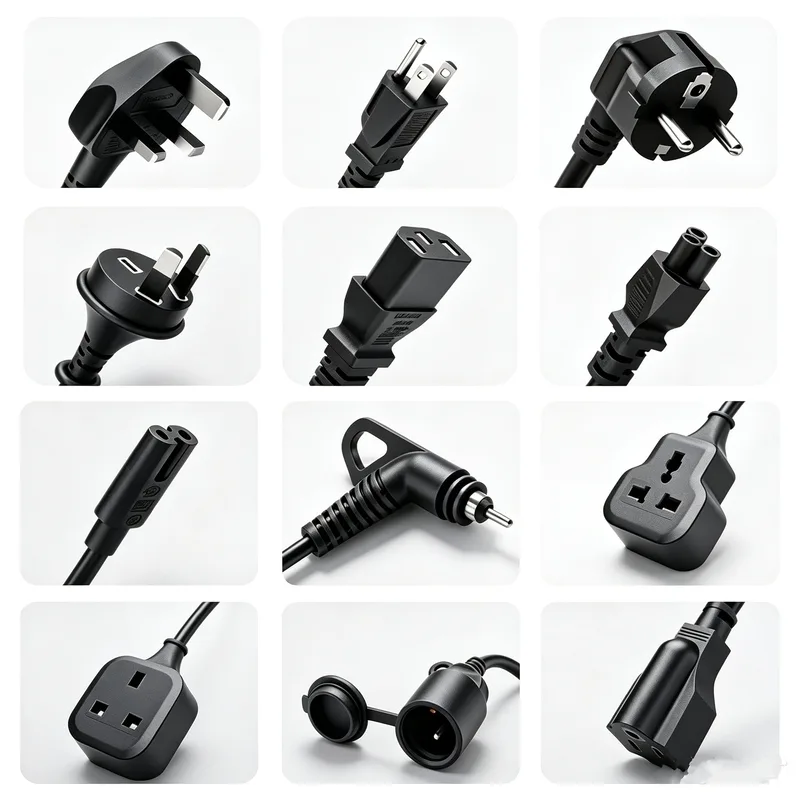
An overheating power cord is rarely a random defect. It often indicates undersized conductors, excessive current draw, loose terminal connections, or damaged insulation. For importers and OEM equipment manufacturers, identifying these issues before mass production helps reduce the risk of product failures, costly returns, and safety-related complaints.
Every cord assembly must match the electrical requirements and operating conditions of the end device, including rated current, conductor cross-sectional area, and insulation temperature rating. Poor conductor quality, inadequate terminal connections, or unsuitable plug molding can compromise electrical performance and increase the risk of excessive heat buildup under load.
Below are six common causes of power cord overheating and the technical specifications buyers should verify before placing bulk orders.
1. Undersized Conductor Gauge (Insufficient Wire Cross-Section)
Using a power cord with an undersized conductor can increase the risk of overheating. When the conductor cross-sectional area is insufficient for the required current, electrical resistance increases, resulting in greater heat generation along the cable.
Choosing the correct wire size involves more than matching plug types. Rated current, cable length, ambient temperature, insulation material, and applicable safety standards all influence the required conductor specification. A 0.75 mm² cord suitable for one low-power application may not be appropriate for equipment with a higher continuous current demand.
What buyers should verify:
- Conductor cross-section: Confirm the exact mm² or AWG specification against the equipment’s electrical requirements.
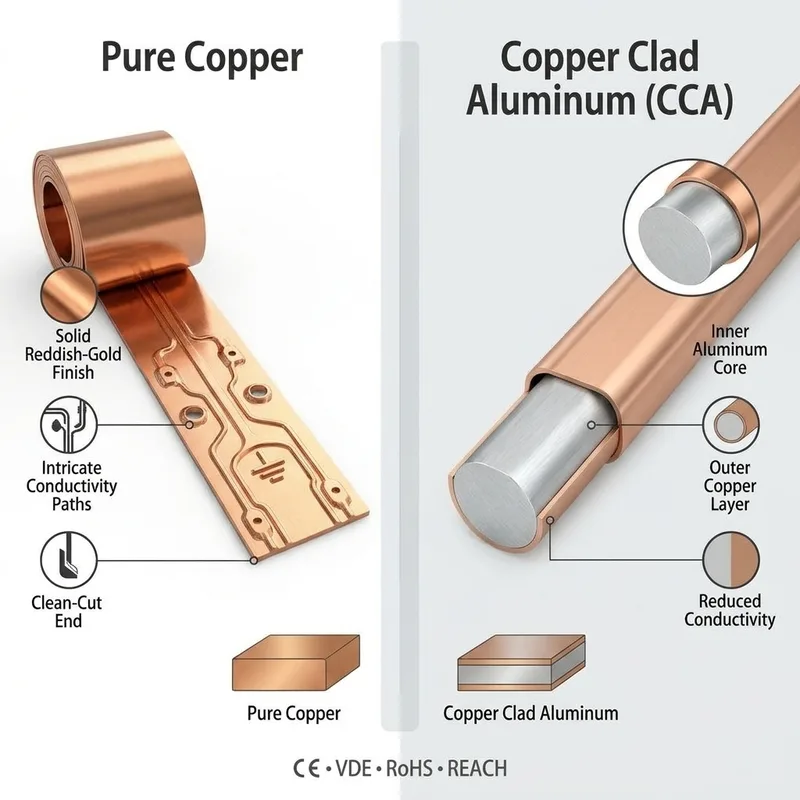
- Conductor material: Verify that the cable uses pure copper conductors rather than copper-clad aluminum (CCA).
- Strand construction: Check strand count and conductor construction according to the required flexibility and application.
- Insulation temperature rating: Confirm that the insulation material is suitable for the expected operating temperature.
- Regional compliance: Check that conductor size and cable construction meet the applicable requirements for the target market.
Never select a power cord based on outer jacket thickness or unit price alone. Buyers should verify the actual conductor cross-section and cable construction in the product specification.
2. Continuous Current Overload
Even a properly manufactured power cord can overheat if the connected equipment draws more current than the cord assembly is rated to carry. Sustained operation above the rated current increases conductor temperature and may accelerate insulation aging.
This can happen when users replace original power cords without checking their electrical ratings or connect multiple high-power appliances to an extension cord or power strip beyond its rated capacity.
What buyers should verify:
- Component-level ratings: Confirm that the plug, cable, and connector have compatible voltage and current ratings. The lowest-rated component limits the rating of the complete assembly.
- Operating load: Check the equipment’s maximum expected current during normal operation.
- Continuous-duty requirements: Confirm that the cord assembly is suitable for the intended operating duration and thermal conditions.
- Total connected load: For extension cords and power strips, verify that the combined load does not exceed the product’s rated capacity.
For OEM projects, select the power cord according to the equipment’s maximum expected operating load rather than its idle power consumption.
3. Loose Terminal Crimping and Poor Electrical Contact
A power cord can have an adequately sized conductor and still develop excessive heat at the plug or connector if its internal electrical connections are poorly assembled.
Loose terminals, inconsistent crimping, damaged conductor strands, or poor contact between conductive parts can increase contact resistance. This may create localized hot spots around the connection points, even when the cable itself is operating within its rated current.
What buyers should verify:
- Terminal crimping consistency: Check crimp quality and the manufacturer’s process controls.
- Conductor stripping precision: Ensure that stripping does not damage or unnecessarily remove copper strands.
- Contact retention: Verify that connector contacts maintain secure electrical connections during normal use.
- Assembly inspection: Check internal terminal positioning and connection quality.
- Electrical testing: Confirm that appropriate continuity, polarity, and dielectric strength tests are performed according to the applicable product requirements.
Ask prospective manufacturers how they control terminal crimping and connection quality. Consistent assembly processes help reduce the risk of localized overheating and premature product failure.
4. Damaged Cable Insulation
Damaged cable insulation can compromise the electrical protection of a power cord. Cuts, crushing, abrasion, and excessive bending may expose conductors or weaken the insulation barrier, increasing the risk of electrical leakage, short circuits, or other faults.
In commercial and industrial environments, insulation damage may result from sharp cabinet edges, restricted bend radii, repeated mechanical movement, or exposure to temperatures beyond the cable’s rated limits.
What buyers should verify:
- Jacket material and thickness: Select PVC, rubber, or TPE according to the application’s mechanical and environmental requirements.
- Bending performance: Confirm that the cable is suitable for the expected routing and bending conditions.
- Thermal aging resistance: Check the insulation’s temperature rating and suitability for the operating environment.
- Mechanical durability: Review relevant abrasion, flexing, or impact test requirements.
- Insulation test results: Request applicable dielectric strength and insulation integrity test records.
Selecting suitable jacket materials and protecting cables during installation and use can help reduce premature insulation damage.
5. Weak Strain Relief Design at Plug Terminations
Strain relief protects the cable entry point from excessive pulling, bending, and twisting forces. If the strain relief is poorly designed or incompatible with the cable diameter, mechanical stress may be transferred to the internal conductor connections.
Repeated movement can eventually damage individual conductor strands or weaken internal connections. This may increase local resistance and create hot spots near the plug or connector.
What buyers should verify:
- Cable-to-mold compatibility: Confirm that the strain relief structure matches the cable’s actual outer diameter.
- Molding quality: Inspect the molded cable entry for consistent structure and secure integration with the plug body.
- Flexing performance: Check whether the cable termination meets the applicable flexing test requirements.
- Pull resistance: Verify that the cord assembly can withstand the mechanical forces expected during normal use.
Plug molds should be matched to the cable specifications rather than selected independently. Proper strain relief design helps protect internal connections and improve the mechanical reliability of the finished cord.
6. Mismatched Environmental and Application Specifications
A power cord that meets basic electrical requirements may still be unsuitable for its intended operating environment. Ambient temperature, repeated flexing, oil exposure, moisture, and installation conditions can all affect cable performance and service life.
For example, a standard indoor PVC cord may not be suitable for equipment exposed to elevated temperatures or frequent mechanical movement. Applications involving motors, commercial appliances, or industrial equipment may require different cable materials and construction.
What buyers should verify:
- Ambient temperature: Confirm that the cable and connector temperature ratings are suitable for the expected environment.
- Connector temperature requirements: Select connectors designed for the appliance’s operating conditions. For example, IEC C15 connectors are intended for specified high-temperature appliance applications.
- Dynamic flex requirements: Consider flexible conductor construction and suitable rubber or TPE jackets for moving equipment.
- Chemical and oil resistance: Select specialized cable materials when exposure to oils, cleaning agents, or other chemicals is expected.
- Target market approvals: Verify the applicable certifications and markings for the specific cable and plug model.
Before requesting a quotation, provide the manufacturer with details about the equipment, operating temperature, cable routing, and expected movement. This helps ensure that the conductor, insulation, plug, and connector specifications are suitable for the application.
How to Prevent Power Cord Overheating Before Placing a Bulk Order
Instead of dealing with product failures after shipment, buyers can evaluate four important technical areas during the RFQ and pre-production sampling stages:
- Provide complete electrical and environmental requirements: Share the rated current, operating voltage, cable length, ambient temperature, and intended application so the manufacturer can recommend suitable cable specifications.
- Inspect internal construction: Examine pre-production samples to verify conductor material, cross-sectional area, terminal connections, and insulation construction.
- Review factory testing procedures: Confirm that the manufacturer performs appropriate electrical and mechanical tests, such as continuity, polarity, dielectric strength, flexing, and pull tests, according to the applicable product requirements.
- Verify market-specific compliance: Check that the cable markings, plug specifications, and supporting certification documents correspond to the exact product model and destination market.

A thorough specification review and sample evaluation before mass production can help reduce the risk of overheating, connection failures, and costly quality issues after delivery.
With over 20 years of manufacturing experience, SEBLIP supplies custom OEM/ODM power cords built with 100% pure copper conductors and strict end-of-line testing. Explore our custom AC power cords or contact our engineering team with your load and certification specs for a fast quotation.