
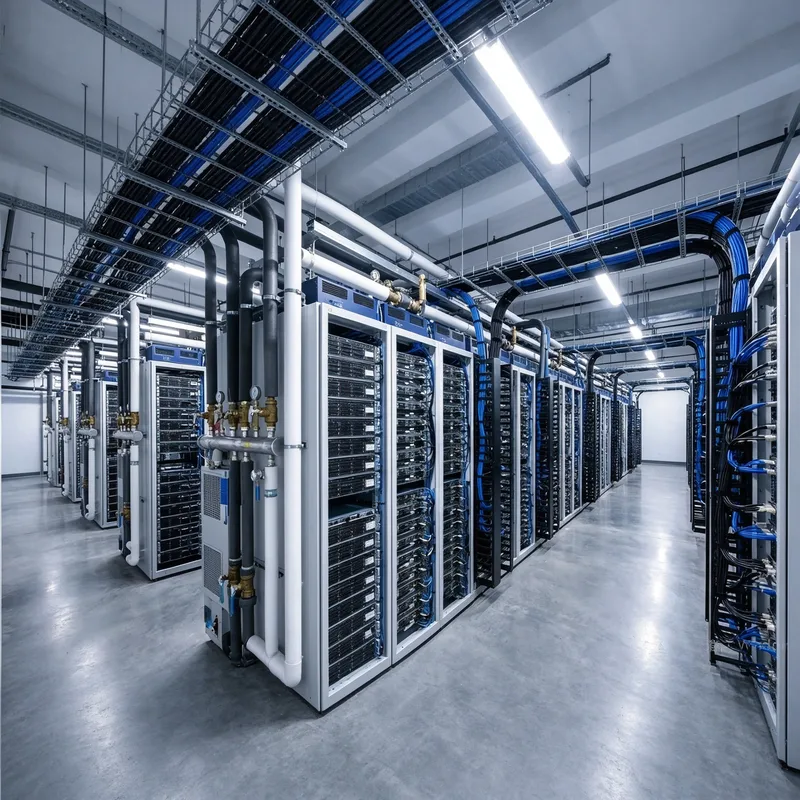
The rapid growth of AI data centers is increasing demand for reliable power systems and electrical components. As server installations expand, power cords, connectors, and distribution equipment must meet the electrical requirements of increasingly demanding computing environments.
For power cord manufacturers and electrical component suppliers, this creates new opportunities to support data center equipment makers, distributors, and OEM customers with application-specific products.
AI Data Center Expansion Is Increasing Global Power Demand
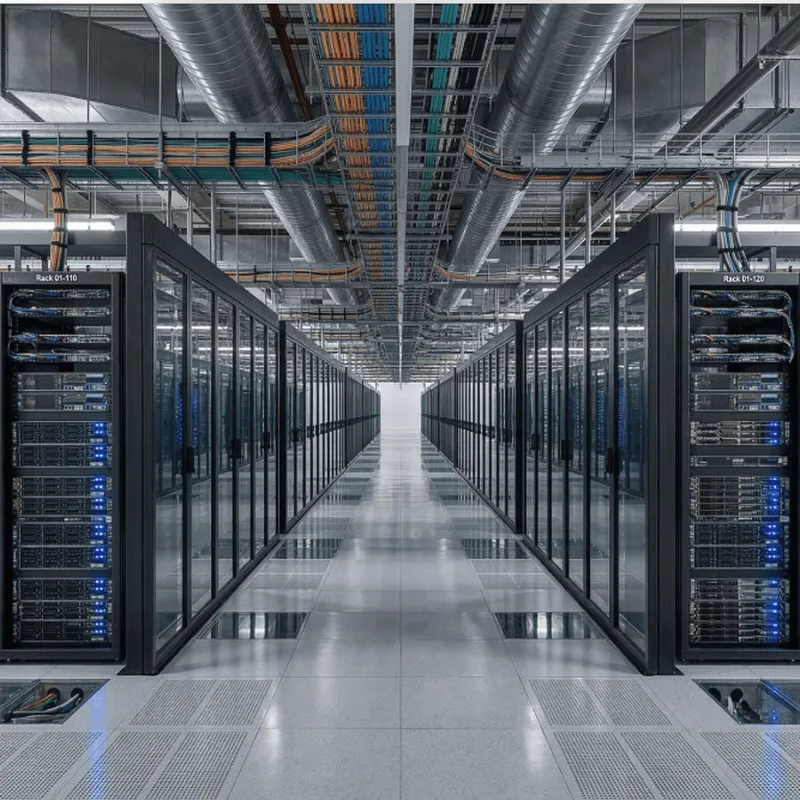
Training and operating large AI models requires substantial computing power. High-performance GPUs, specialized processors, storage systems, and high-speed networking equipment all contribute to the electricity consumption of modern data centers. These systems also generate considerable heat, making power supply and cooling important considerations in data center design.
To support this growing demand, data center operators are investing in new facilities and upgrading existing infrastructure. According to the International Energy Agency (IEA), the world’s largest data center operators are expected to spend more than US$700 billion in capital expenditure in 2026, with most of this investment directed toward new data center construction.
TrendForce also estimates that global data center power demand capacity will reach 161 GW in 2026, representing an increase of approximately 31% year over year. AI servers are expected to account for around 33.4% of total capacity.
As more servers are installed and rack power density increases, data center operators must pay closer attention to power distribution, cable specifications, and electrical connections. These requirements also influence the selection and procurement of power cords, connectors, and other electrical components.
High-Power Servers Require Suitable Power Connections
AI data centers house GPUs, processors, high-density storage, and networking equipment in server racks. When several high-performance servers operate in the same rack, power distribution and cable selection require closer attention.
Each device needs a power cord that matches its electrical load and connection requirements. Buyers should consider connector type, rated current, conductor cross-sectional area, cable length, insulation specifications, and applicable safety standards when selecting a cord.
Common power cord configurations in data center environments include:
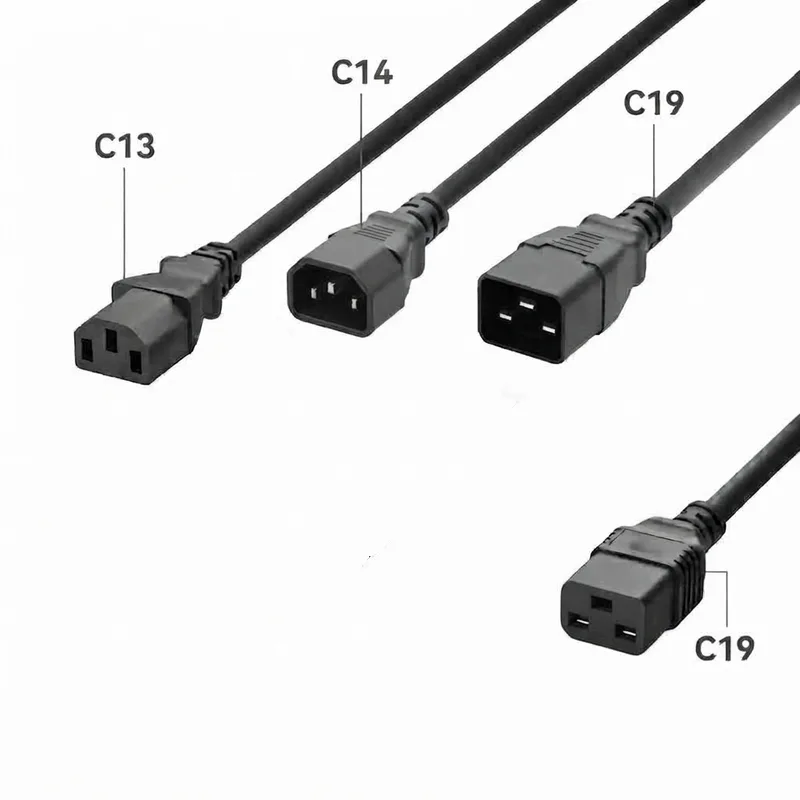
- C13 and C14 Power Cords: Commonly used with computers, monitors, networking equipment, and other compatible IT devices.
- C19 and C20 Power Cords: Used for higher-current applications, including compatible servers, UPS systems, and rack-mounted power equipment.
- PDU Power Cords: Connect rack PDUs to compatible equipment. The required connector type and current rating depend on the PDU outlets and equipment inlets.
A connector that physically fits does not necessarily mean the power cord is suitable for the application. The complete cable assembly must meet the equipment’s electrical specifications and the requirements of its operating environment.
Pure Copper Conductors and Cable Manufacturing Quality Matter
For power cords used in data centers and other demanding applications, conductor material and cable construction both affect electrical performance. Copper is widely used in power cord manufacturing because of its good electrical conductivity. However, the conductor material alone does not determine the quality of a finished cable assembly.
When selecting power cords, buyers should consider several key specifications:
- Conductor Material: Pure copper conductors are commonly used in power cords. Copper quality and conductor construction should meet the requirements of the intended application.
- Conductor Cross-Sectional Area: Wire size must match the rated current, cable length, and installation conditions.
- Insulation and Outer Jacket: PVC and other insulation materials should be suitable for the voltage rating, temperature limits, mechanical stress, and working environment.
- Connector Quality: Proper terminal crimping, contact construction, and injection molding quality all contribute to reliable electrical connections.
- Electrical Testing: Finished cords should undergo appropriate electrical safety and quality checks to verify compliance with applicable product standards.
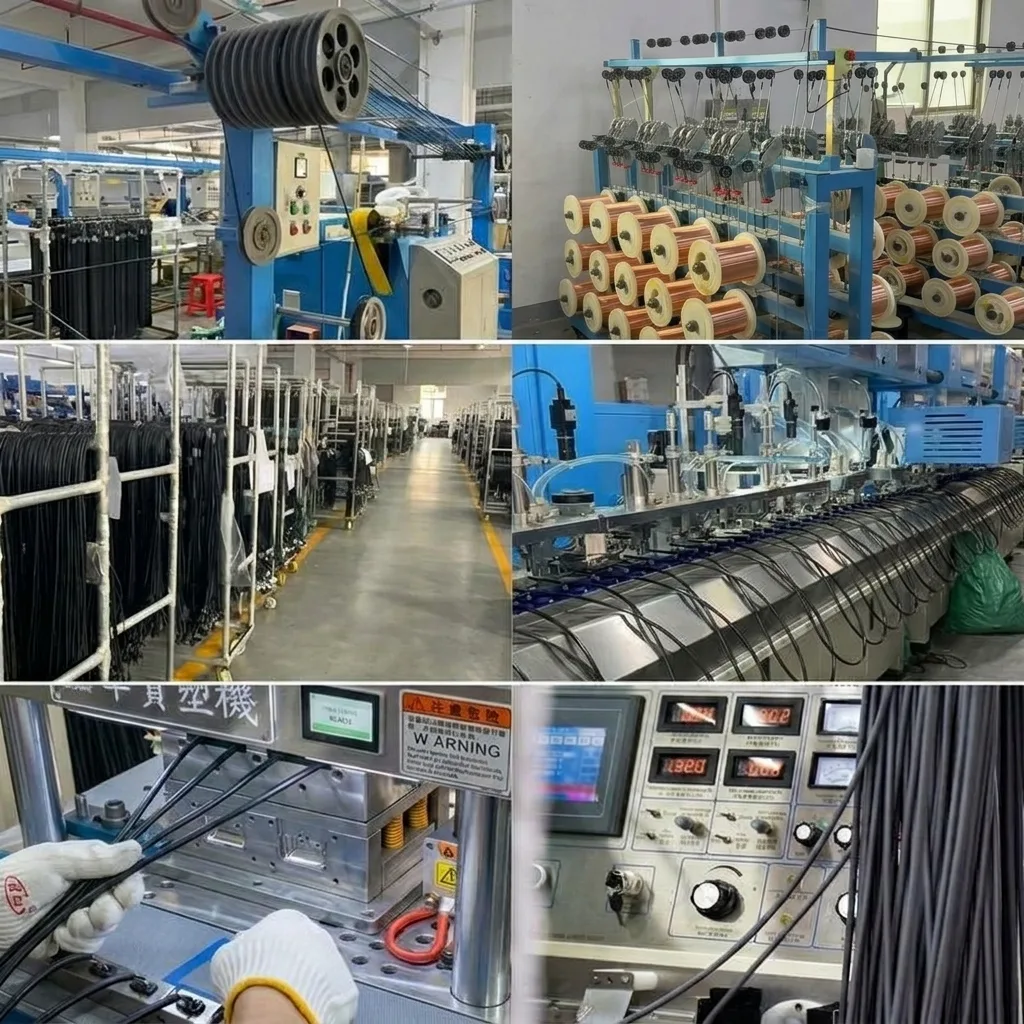
In power cord manufacturing, quality control starts long before final assembly. Wire drawing, copper stranding, cable production, injection molding, assembly, and electrical testing all require proper process control. Consistent production procedures help reduce variations between batches and ensure that finished cords meet their specified requirements before shipment.
Cable Supply Capacity and Lead Times Are Becoming Important Considerations
The expansion of AI data centers is creating additional demand across the cable manufacturing industry.
In October 2026, Reuters reported that cable manufacturing capacity was becoming a bottleneck for AI-driven data center construction. Nexans CFO Vincent Piquet said global cable supply was tight and that establishing a new cross-linked polyethylene (XLPE) cable production line could take around three years.
The report mainly concerns large-scale power infrastructure cables rather than standard equipment power cords. However, it highlights how growing demand can put pressure on manufacturing capacity and delivery schedules across the electrical supply chain.
For importers, distributors, and equipment manufacturers, this makes supplier evaluation particularly important. Buyers should consider a factory’s production capacity, quality control procedures, raw material management, and ability to maintain reliable delivery schedules.
For power cord suppliers, established production lines, in-house manufacturing processes, and OEM/ODM flexibility are also important. These capabilities help manufacturers handle different plug standards, cable specifications, and customized order requirements.
What Opportunities Does AI Data Center Growth Create for Electrical Component Manufacturers?
The expansion of AI infrastructure creates demand across several product categories. While large-scale power infrastructure requires specialized high-voltage and medium-voltage cable systems, data center equipment also needs suitable low-voltage power cords, connectors, and electrical accessories.
| Product Category | Typical Applications |
|---|---|
| C13 and C14 Power Cords | Compatible servers, computers, monitors, and IT equipment |
| C19 and C20 Power Cords | Compatible higher-current servers, UPS systems, and rack-mounted equipment |
| PDU Power Cords | Connections between rack PDUs and compatible equipment |
| Power Connectors | Electrical connections for compatible power distribution systems |
| Power Cable Assemblies | Customized cable configurations for equipment manufacturers |
| Plug and Socket Components | Electrical connection components for compatible power products |
For manufacturers, opportunities are not limited to supplying standard products. Buyers may also require customized cable lengths, conductor sizes, connector configurations, plug standards, jacket materials, and packaging.
This makes manufacturing flexibility and technical communication important when serving international B2B customers.
Choosing a Power Cord Manufacturer for Data Center Applications
When purchasing power cords and electrical components for data center equipment, buyers need to look beyond connector types and product prices. A supplier’s manufacturing experience, material control, testing procedures, and ability to handle customized orders are also worth considering.
Here are several points to check when evaluating a power cord manufacturer:
- Manufacturing Experience: Experience producing IEC power cords and electrical components for different equipment and markets.
- Material Control: Clearly defined specifications for copper conductors, cable insulation, and outer jacket materials.
- Product Range: Supply of C13, C14, C19, C20, and other IEC power cord configurations.
- Quality Inspection: Electrical testing and quality checks throughout production and before shipment.
- Customization: Options for cable length, conductor size, connector configurations, plug standards, and OEM/ODM requirements.
- Production Capacity: Sufficient manufacturing capacity and production planning for repeat orders and customized projects.
SEBLIP is a power cord and electrical component manufacturer operated by Dongguan Zhenghao Electric Company Ltd. Based in Dongguan, China, the company has more than 20 years of factory experience and operates a 40,000 m² manufacturing facility.
Its product range includes power cords, extension cords, power connectors, plug components, and other electrical products. Manufacturing processes cover wire drawing, copper stranding, cable production, injection molding, assembly, electrical testing, and final quality inspection.
For data center equipment and related applications, SEBLIP offers customized IEC power cord configurations, including C13, C14, C19, and C20 cable assemblies. Cable specifications, connector options, and electrical ratings can be selected according to the requirements of the connected equipment.
With OEM and ODM services, SEBLIP can also support customized cable lengths, conductor sizes, plug configurations, colors, logos, and packaging for different customer requirements.
Conclusion
As AI data centers expand, selecting the right power cords and connectors becomes critical to safe, reliable power distribution across servers, rack PDUs, and UPS systems. Before placing an order, buyers should verify connector compatibility, copper conductor specs, cable construction, manufacturing quality, and supplier delivery capacity.
Whether you need standard C13, C14, C19, and C20 power cords or customized OEM/ODM cable assemblies, contact SEBLIP to discuss suitable specifications for your application.