
C13 vs C5 Power Cord
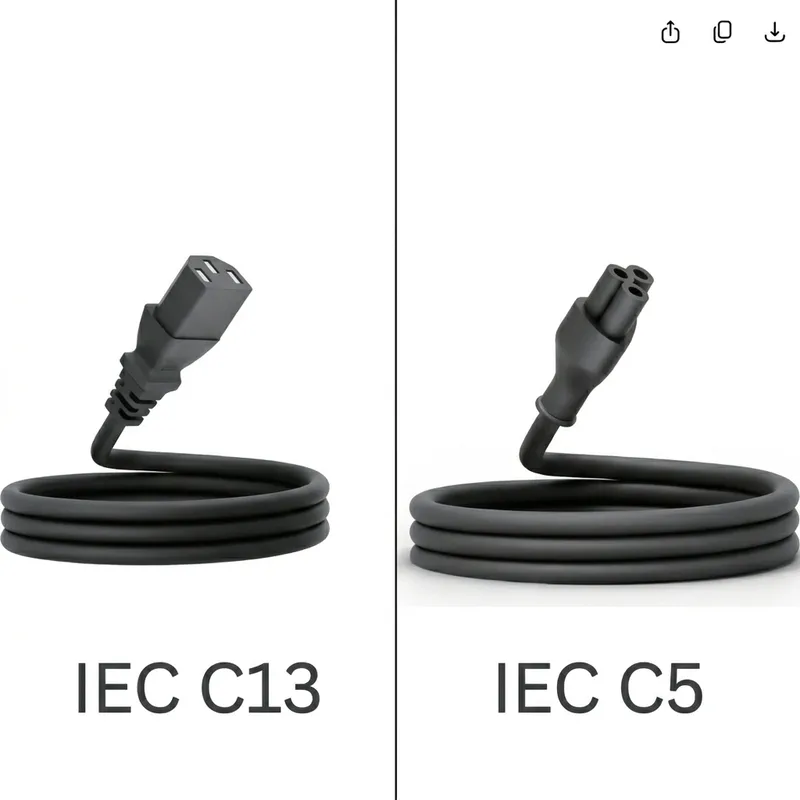
When sourcing IEC 60320 compliant cables, buyers often confuse C13 and C5 connectors. While both power everyday office electronics, their physical design, current ratings, and equipment pairings differ significantly.
Simply put:
- IEC C13 (The “3-Pin Desktop” Connector) is the heavy-duty workhorse found on desktop PC power supplies, office monitors, and server racks.
- IEC C5 (The “Mickey Mouse” or “Cloverleaf” Connector) is a compact 3-prong standard engineered almost exclusively for laptop power bricks and portable adapters.
What Is a C13 Power Cord?
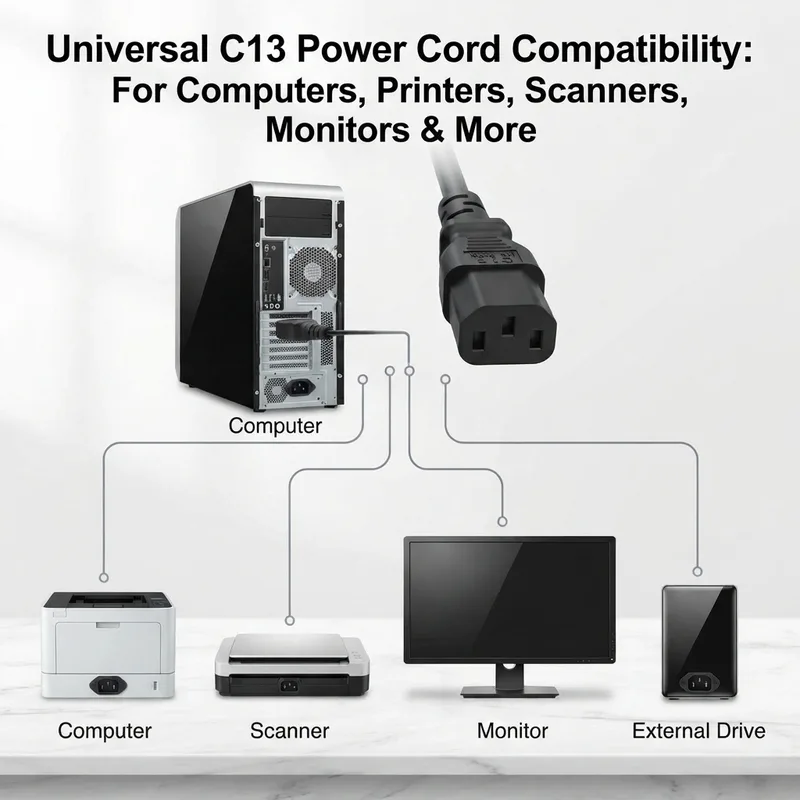
A C13 power cord is an AC power cable fitted with an IEC 60320 C13 female connector. It is designed to connect to equipment with a compatible C14 appliance inlet.
The C13 connector has a rectangular shape with three contact openings arranged for Live, Neutral, and Earth connections. It is widely used in computer and office equipment that requires a grounded power connection.
Common Applications of C13 Power Cords:
- Desktop computers and PC power supplies
- Computer monitors and displays
- Servers and networking equipment
- Printers and office machines
- Other compatible electronic equipment
Typical Technical Characteristics:
- Connector type: IEC 60320 C13
- Mating appliance inlet: IEC 60320 C14
- Standard current rating: Up to 10A under the IEC 60320 rating
- Standard voltage rating: Up to 250V AC, depending on the applicable product configuration
- Conductor configuration: Three-core Live, Neutral, and Earth
C13 power cords are commonly selected for desktop computer systems and other equipment with a C14 inlet.
What Is a C5 Power Cord?
A C5 power cord is an AC power cable equipped with an IEC 60320 C5 connector. It is designed to connect to equipment with a compatible C6 appliance inlet.
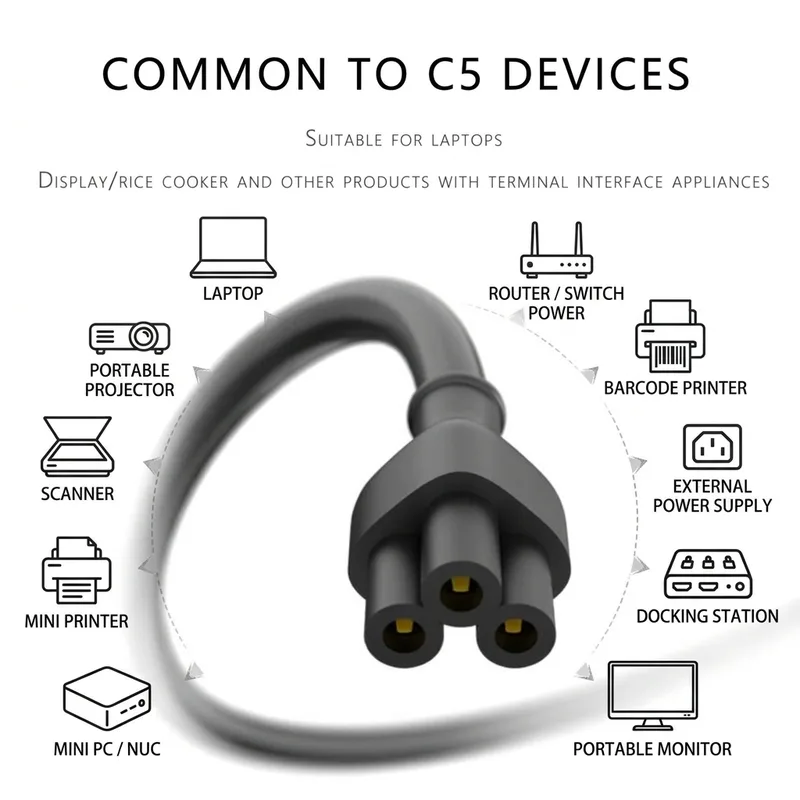
The C5 connector features a distinctive three-lobed shape, commonly known as a Cloverleaf Connector or Mickey Mouse Connector. Its compact design makes it suitable for many laptop power adapters and portable electronic devices.
Common Applications of C5 Power Cords:
- Laptop power adapters
- Notebook computer chargers
- Compact power supplies
- Projectors and compatible audiovisual equipment
- Other electronic devices with C6 inlets
Typical Technical Characteristics:
- Connector type: IEC 60320 C5
- Mating appliance inlet: IEC 60320 C6
- Standard current rating: Up to 2.5A under the IEC 60320 rating
- Standard voltage rating: Up to 250V AC, depending on the applicable product configuration
- Conductor configuration: Three-core Live, Neutral, and Earth
C5 power cords are commonly used with external laptop power adapters rather than connecting directly to the laptop itself.
C13 vs C5 Power Cord: Key Differences
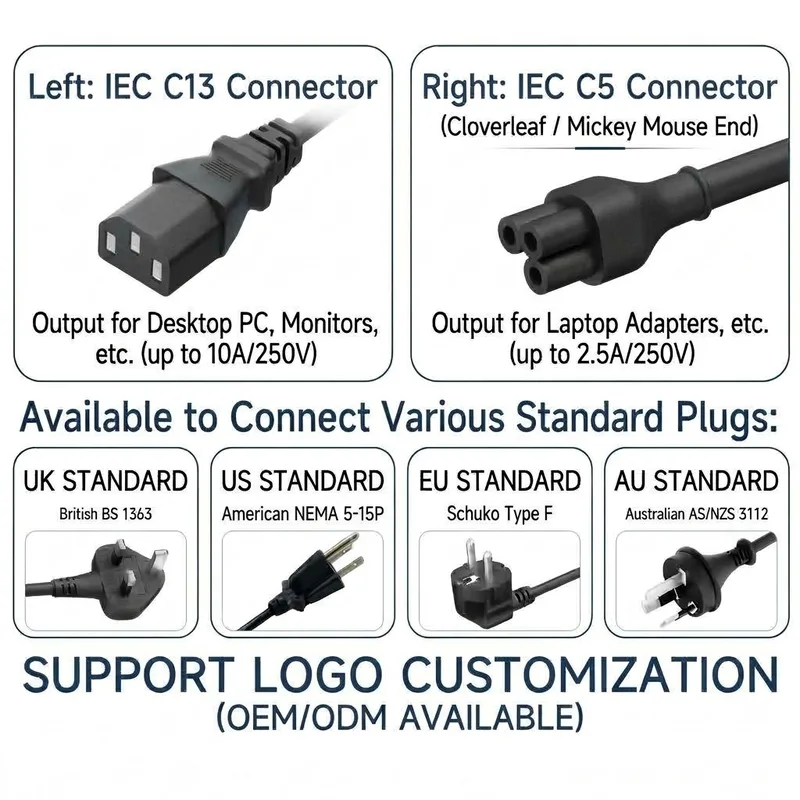
Although both connectors belong to the IEC 60320 family, their physical structures and intended applications are different.
| Comparison | C13 Power Cord | C5 Power Cord |
|---|---|---|
| IEC Connector | C13 | C5 |
| Matching Inlet | C14 | C6 |
| Appearance | Rectangular, three-contact design | Three-lobed cloverleaf design |
| Standard Current Rating | 10A | 2.5A |
| Standard Voltage Rating | Up to 250V AC | Up to 250V AC |
| Typical Applications | Desktop PCs, monitors, servers | Laptop adapters, compact power supplies |
| Common Name | Computer Power Cord | Cloverleaf Power Cord |
| Grounding | Three-core grounded connection | Three-core grounded connection |
OEM & ODM Customization for C5 and C13 Power Cords
SEBLIP offers customized C5 and C13 power cords for international markets, with flexible options for plugs, cables, electrical ratings, and branding.
Customization Options:
- Plug Standards: UK, US, EU, AU, South African, and other regional plugs.
- Cable Materials: PVC and rubber cables.
- Cable Specifications: Custom wire sizes, core configurations, colors, and lengths.
- Electrical Ratings: Voltage and current options based on product requirements.
- Branding: Custom logos, labels, and packaging.
How to Choose Between C13 and C5 Power Cords
Choosing between a C13 and C5 power cord starts with identifying the appliance inlet on the equipment.
Choose a C13 Power Cord When:
- Connecting desktop computers with C14 inlets.
- Supplying power to compatible monitors and servers.
- Using office equipment designed for C13 connectors.
Choose a C5 Power Cord When:
- Connecting laptop power adapters with C6 inlets.
- Powering compatible compact electronic equipment.
- Using external adapters designed for Cloverleaf connectors.
Before purchasing, check the connector type, rated current, cable specifications, and input plug standard. The equipment manufacturer’s requirements should always determine the correct power cord.
Cable Materials and Specifications: PVC vs. Rubber
Besides connector type, cable material and construction are important considerations when sourcing C13 and C5 power cords.
PVC Power Cables
PVC cables are commonly used for computer power cords and general indoor applications. They offer practical insulation, durability, and flexible manufacturing options.
Rubber Power Cables
Rubber cables are often selected for applications requiring greater flexibility and specific environmental or mechanical properties. The appropriate rubber cable type depends on the intended operating conditions.
Power Cord Safety and Compliance
C13 and C5 power cords should meet the applicable electrical safety and dimensional requirements for their intended markets.
IEC 60320 provides internationally recognized requirements for appliance couplers, including connector dimensions and electrical characteristics (learn more on Wikipedia’s IEC 60320 Guide).
When evaluating power cords, buyers should consider:
- Connector compatibility and rated current.
- Conductor size and cable construction.
- Continuity and polarity testing.
- Insulation resistance and dielectric strength testing.
- Applicable national approvals and market-specific requirements.
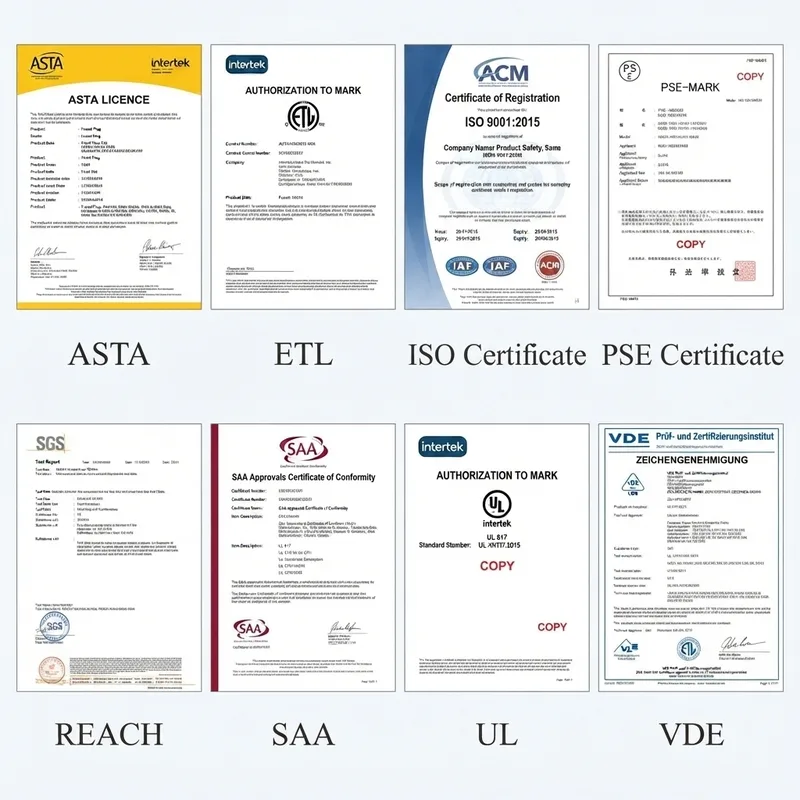
Certification requirements vary according to the input plug, cable type, product configuration, and destination market. Buyers should request relevant test reports and certification documents for the specific model.
Conclusion
C13 and C5 power cords serve different equipment requirements despite belonging to the same IEC 60320 connector family. C13 is commonly used for desktop computers, monitors, and servers, while C5 is frequently found on laptop power adapters.
Understanding connector compatibility, current ratings, cable materials, and regional plug standards helps buyers select suitable power cords for different applications.
For distributors, importers, and equipment manufacturers, these specifications are important when developing reliable power cord sourcing and customization plans.
Need custom C13 or C14 power cords for your market? Contact our engineering team today for a quick quote