
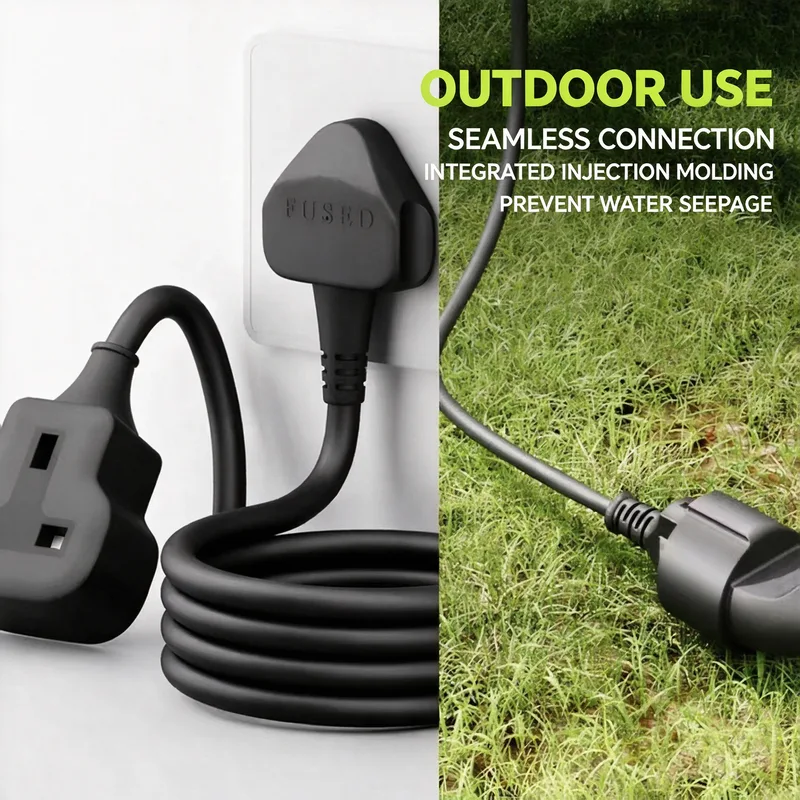
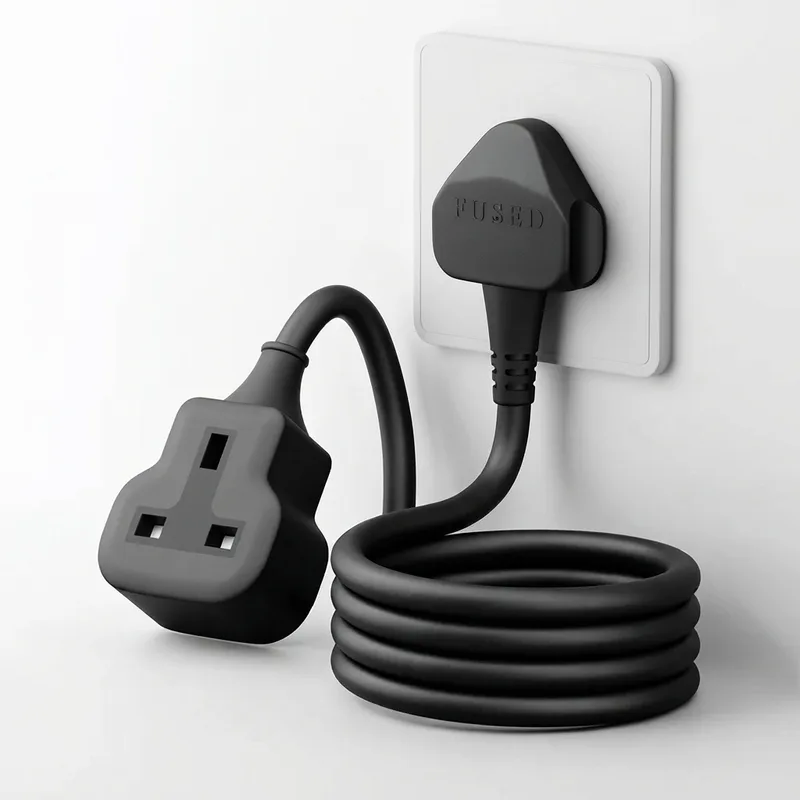
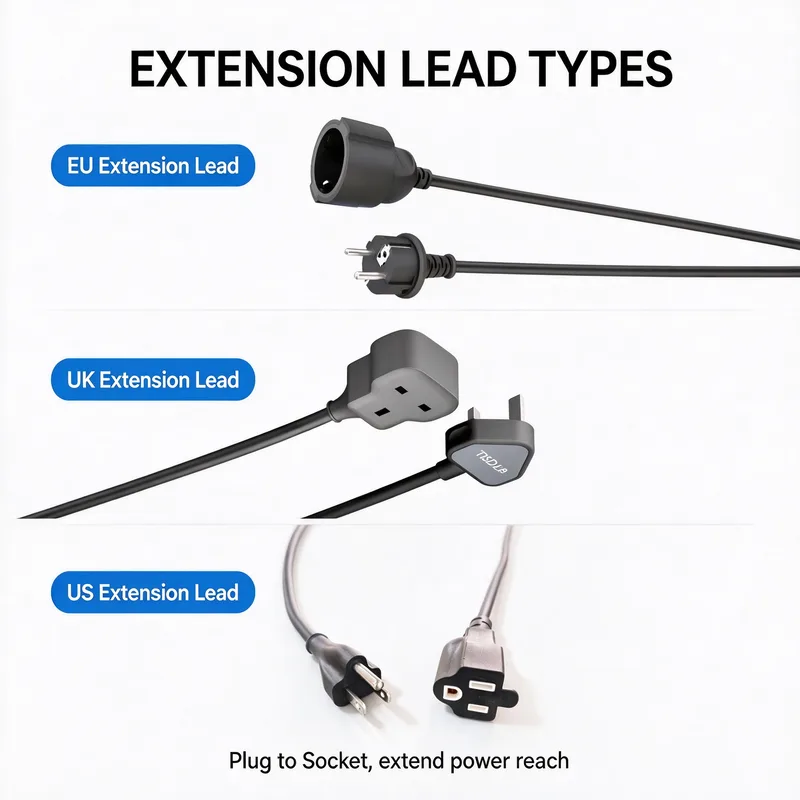
An extension lead is an electrical product designed to extend the distance between a power outlet and an electrical appliance. It typically consists of a power plug, a flexible cable, and one or more socket outlets.
When an appliance’s original power cord is not long enough to reach a wall outlet, an extension lead provides a practical way to bridge the distance. Depending on its design, it can also provide additional socket outlets for connecting multiple compatible electrical devices.
Extension leads are widely used in homes, offices, workshops, and commercial environments. Although their basic function is simple, their safety and reliability depend on several factors, including cable specifications, conductor materials, plug and socket construction, insulation, and manufacturing quality.
For importers, distributors, and electrical product buyers, understanding these details is important when evaluating extension lead products and selecting a reliable manufacturer.
Extension Lead Power Ratings and Cable Specifications
The power rating and cable specifications are two important factors when selecting an extension lead. They determine how much electrical load the product is designed to handle and whether its cable construction is suitable for the intended application.
1 Understanding Extension Lead Power Ratings
In a single-phase AC system, the relationship between real power, voltage, current, and power factor is:
Power (W) = Voltage (V) × Current (A) × Power Factor (PF)
For simple resistive loads with a power factor close to 1, the calculated power is approximately equal to voltage multiplied by current. The rated load of an extension lead must always follow its product specifications and applicable standards.
For example:
| Rated Voltage | Rated Current | Voltage × Current (VA) |
|---|---|---|
| 125V | 10A | 1,250VA |
| 125V | 15A | 1,875VA |
| 250V | 10A | 2,500VA |
| 250V | 13A | 3,250VA |
| 250V | 16A | 4,000VA |
These figures represent the voltage-current product (VA). For loads with a power factor close to 1, the numerical value in watts (W) will be approximately the same. The actual permissible load must follow the extension lead’s rated specifications and applicable standards.
2 Cable Materials and Cross-Sectional Area
The cable is a key component of an extension lead because it carries electrical current between the power plug and socket outlets.
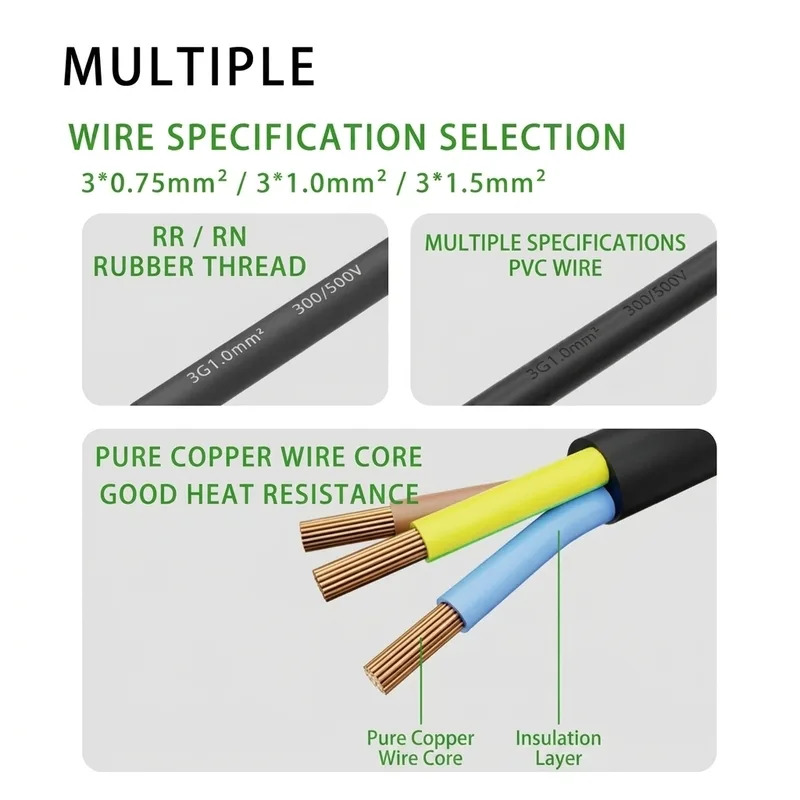
Copper is commonly used as the conductor material due to its good electrical conductivity and flexibility. The conductor cross-sectional area is another important specification because it affects electrical resistance and current-carrying capability.
Common cable configurations include:
- 2 × 0.75mm²: Two-core cable for suitable applications without a protective earth conductor.
- 3G0.75mm²: Three-core cable with a protective earth conductor.
- 3G1.0mm²: Three-core cable used in extension leads designed for compatible electrical ratings.
- 3G1.5mm²: Larger three-core cable commonly used in products designed for higher current ratings or specific applications.
The appropriate cable specification depends on rated current, cable length, installation conditions, insulation material, temperature requirements, and the applicable product standard. A larger conductor does not automatically make an extension lead suitable for every high-power application.
Extension lead cables commonly use PVC insulation and outer jackets, while other materials may be selected according to flexibility, temperature resistance, and application requirements.
Even when two extension leads have the same rated current, they may require different cable cross-sectional areas because cable length, ambient temperature, and installation conditions affect voltage drop and heat generation. For example, a longer cable may require a larger conductor cross-section to help limit voltage drop under load. Therefore, cable size should be selected according to the complete operating conditions and applicable product standards.
Extension Lead vs. Power Cord: What Is the Difference?
Power cords and extension leads both provide electrical connections, but they serve different purposes.
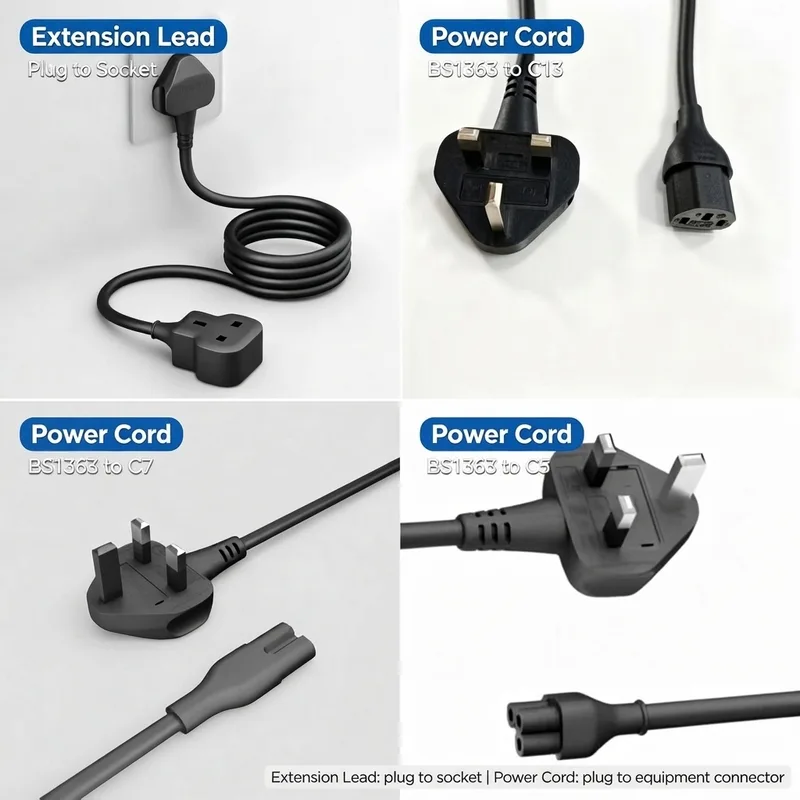
A power cord connects an electrical appliance directly to a power source. It typically features a wall plug on one end and an appliance connector, such as IEC C13, C7, or C5, or stripped leads on the other.
An extension lead extends the distance between a wall outlet and an electrical appliance through an additional cable and one or more socket outlets. It is useful when the appliance’s original power cord cannot reach the available wall outlet.
Regional Plug Standards and Compliance Requirements
Extension leads supplied to international markets must meet the plug and socket specifications, electrical ratings, and applicable safety requirements of the destination country.
Before placing an order, buyers should confirm the plug type, socket configuration, rated voltage and current, cable specifications, product markings, and required compliance documents. A plug that physically fits a wall outlet does not necessarily mean the complete extension lead complies with local safety requirements.
| Target Market / Region | Common Plug & Socket Standard | Typical Product Rating | Compliance Considerations |
|---|---|---|---|
| UK | BS 1363 (Type G) | 250V / 13A | Fused plug, socket protection, and applicable UK product requirements |
| Middle East, Singapore & Malaysia | Market-specific Type G configurations | Depends on destination market | Relevant national approvals and documentation, such as SASO or GCC requirements where applicable |
| Continental Europe | CEE 7/7 plug (Type E/F compatible) or CEE 7/5 socket (Type E) | Commonly 250V / 16A | Earthing configuration, socket protection, and applicable national requirements |
| Australia & New Zealand | AS/NZS 3112 (Type I) | Commonly 250V / 10A or 15A | Plug pin design, product rating, and applicable Australian/New Zealand requirements |
| North America | NEMA 5-15 configuration | Commonly 125V / 15A | Grounding configuration and applicable certification requirements, such as ETL or UL where approved |
| Japan | JIS C 8303 plug configurations | Common product rating: 125V; Japan’s nominal supply voltage is 100V. | Applicable Japanese requirements and PSE obligations where relevant |
| South Africa | SANS 164 plug configurations, including Type M | Depends on the plug and product design | Applicable SABS and national compliance requirements |
| Brazil | NBR 14136 (Type N) | 250V; current rating depends on the model | Applicable INMETRO requirements and product classification |
Note: The ratings shown are common examples and may vary by product configuration and destination market. Certification and compliance requirements depend on the exact product, model, and applicable regulations. Buyers should confirm the required documents before production.
Key Factors to Check When Selecting an Extension Lead Manufacturer
- Material Quality: Check the copper conductor, cable cross-sectional area, insulation, and housing materials.
- Product Testing: Confirm that the manufacturer performs electrical and mechanical tests according to applicable product requirements.
- Certifications: Verify relevant certificates and compliance documents for the target market.
- Manufacturing Capability: Evaluate the factory’s production capacity, assembly processes, and quality control procedures.

SEBLIP Extension Lead OEM/ODM Manufacturing Capabilities
SEBLIP manufactures extension leads for international importers, distributors, and brand owners. With over 20 years of factory experience and a 40,000 m² manufacturing facility in Dongguan, China, we provide OEM and ODM solutions for different market requirements.
Our customization options include:
- Plug and Socket Types: UK, US, EU, Australian, and other market-specific configurations.
- Cable Specifications: Customized cable lengths, conductor cross-sectional areas, and PVC or other suitable cable materials according to product requirements.
- Product Design and Branding: Customized housing colors, plug and socket colors, logos, labels, and packaging, including PE bags, color boxes, and export cartons.
For customized projects, our team can review customer drawings, electrical specifications, target market requirements, and order quantities to confirm suitable product configurations.
Request an Extension Lead Quote or Sample
Looking for an extension lead manufacturer for your market? Contact the SEBLIP team with your required plug standard, socket configuration, cable specifications, cable length, and estimated order quantity.
We can provide product recommendations, sample support, and quotations based on your product specifications and order requirements.