
Power cords are essential components in computers, servers, household appliances, office equipment, and industrial electrical systems. Although a finished power cord may look like a simple cable with a plug and connector, its production involves several manufacturing processes.
From copper conductor processing and cable extrusion to plug molding, connector assembly, electrical testing, and final packaging, each stage plays an important role in the quality and consistency of the finished product.
Understanding the power cord manufacturing process helps buyers, importers, and electrical equipment manufacturers evaluate suppliers, compare production capabilities, and select suitable products for their applications.
Copper Wire Processing: The Foundation of Power Cord Manufacturing
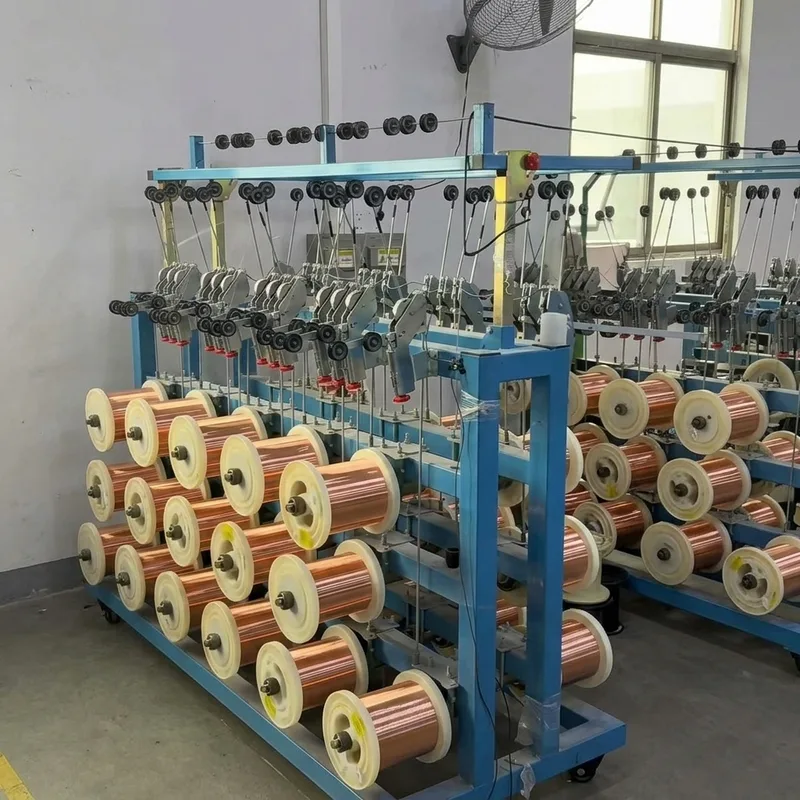
Copper is widely used as a conductor in power cords because of its good electrical conductivity and flexibility. Before it becomes part of a finished cable, copper material needs to go through several processing steps.
The main processes include:
- Copper Wire Drawing: Copper rods are processed through drawing dies to produce copper wires with the required diameter.
- Copper Wire Stranding: Multiple copper wires are twisted together to form a stranded conductor. This structure provides flexibility for power cord applications.
- Conductor Specification Control: The conductor cross-sectional area and strand structure are selected according to the electrical rating and design requirements of the power cord.
Common power cord conductor specifications include 3G0.75mm², 3G1.0mm², and 3G1.5mm². The appropriate conductor size depends on the rated current, intended application, cable construction, and applicable standards.
Proper control of conductor specifications is an important part of consistent power cord production.
Cable Manufacturing: Insulation and Outer Jacket Extrusion
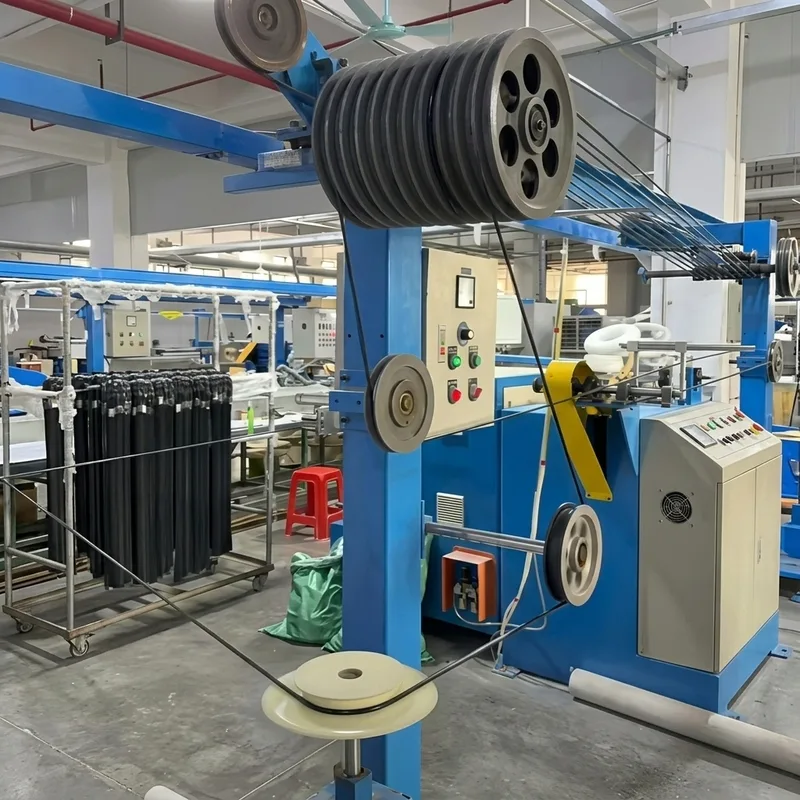
After copper conductor processing, the next stage is cable manufacturing. This process involves applying insulation to individual conductors and forming the outer cable jacket.
Conductor Insulation
Each copper conductor is covered with an insulating material to provide electrical separation between individual cores.
The insulation material and thickness are selected according to the cable design and applicable requirements.
Core Assembly
After insulation, individual conductors are arranged into the required cable construction.
For example, power cords may use two-core or three-core configurations, depending on whether an earth conductor is required.
Outer Jacket Extrusion
The insulated conductors are combined and covered with an outer jacket through an extrusion process.
PVC is commonly used in power cord construction. Other materials may be selected depending on the required flexibility, temperature rating, environmental conditions, and applicable standards.
During cable production, manufacturers need to control important specifications such as:
- Overall cable diameter
- Insulation thickness
- Outer jacket thickness
- Conductor arrangement
- Surface appearance
Consistent extrusion and dimensional control help ensure that the finished cable meets its design requirements.
Plug Manufacturing: Injection Molding and Internal Component Assembly
The plug is an important part of a power cord because it provides the electrical connection between the cable and the power supply.
Different markets use different plug standards. Common examples include UK BS1363, US NEMA, Australian AS/NZS, and various European plug configurations.
Plug manufacturing generally involves several processes:
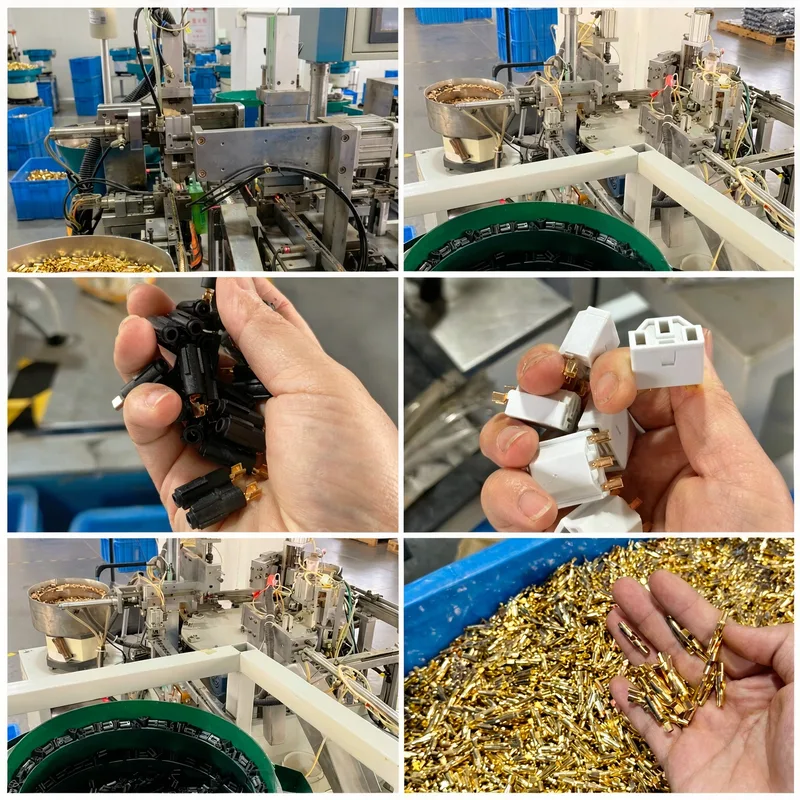
- Metal contact and terminal preparation
- Plastic insulation component molding
- Internal component positioning and assembly
- Cable connection and fixing
- Outer plug molding and inspection
The internal structure of a plug or connector also requires careful consideration.
For IEC connectors such as C13, C7, and C5, internal frames are used to support and position conductive contacts within the connector structure. Their dimensions, material properties, and structural design need to match the corresponding connector specifications.
For connector manufacturers, the dimensional accuracy of these internal components and their fit with other parts are important considerations during assembly.
SEBLIP supplies different types of IEC connector internal frames for connector manufacturing applications, with options for different models and customized production requirements.
Cable Assembly, Quality Testing, and Packaging
Once the cable and plug or connector components are prepared, they move to the assembly stage. The process generally includes the following steps:
- Cable Cutting and Preparation: Cut the cable to the required length and remove the outer jacket and conductor insulation where necessary.
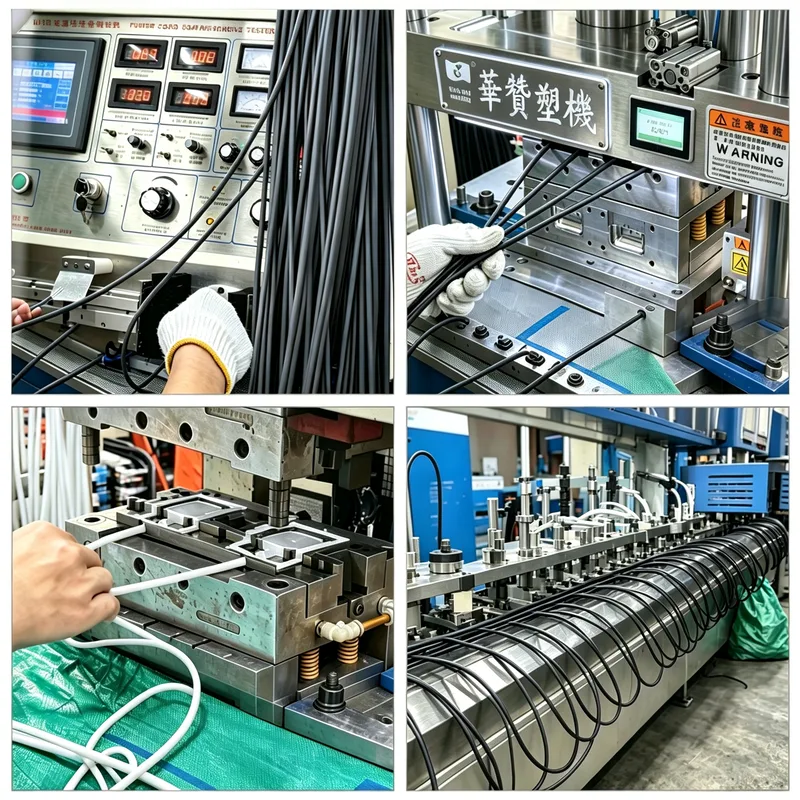
- Terminal Connection and Assembly: Depending on the product design, use terminal crimping, soldering, injection molding, or other specified methods to connect and assemble the plug or connector components.
- Electrical Testing and Quality Inspection: Conduct continuity testing, dielectric withstand testing, insulation resistance testing, dimensional checks, visual inspection, and pull testing where required. These checks help identify connection problems, insulation issues, dimensional deviations, and assembly defects.
- Final Packaging: After passing the required inspections, power cords are prepared for delivery. Packaging options may include individual PE bags, customized labels and barcodes, multiple-cord bundling, inner boxes, export cartons, and OEM-branded packaging.
Different power cord types, such as IEC C13, IEC C19, and country-specific power cords, may require different connector structures, terminal designs, and assembly methods. Proper component matching and process control help maintain consistent product quality during mass production. Packaging also helps protect finished products during storage, handling, and transportation.
What Should Buyers Look for in a Power Cord Manufacturer?
Choosing a power cord manufacturer involves more than comparing prices. Buyers should consider the supplier’s production capabilities, quality control, product certifications, and customization options.
- Raw Material Quality: Check the quality and specifications of copper conductors, cable materials, and plastic components.
- Manufacturing Capabilities: Look for experience in copper wire processing, cable production, injection molding, and product assembly.
- Quality Control and Certifications: Check whether the manufacturer has appropriate electrical testing procedures and product certifications, such as UL, ETL, VDE, SAA, CE, UKCA, or SABS, depending on the product and target market. For specific certification details and available compliance documents, please contact our team for confirmation.
- OEM and ODM Customization: Confirm support for different plug standards, cable lengths, conductor specifications, colors, logos, and packaging.
- Production Capacity and Delivery: Evaluate the factory’s production capacity, order management, and ability to support consistent bulk deliveries.
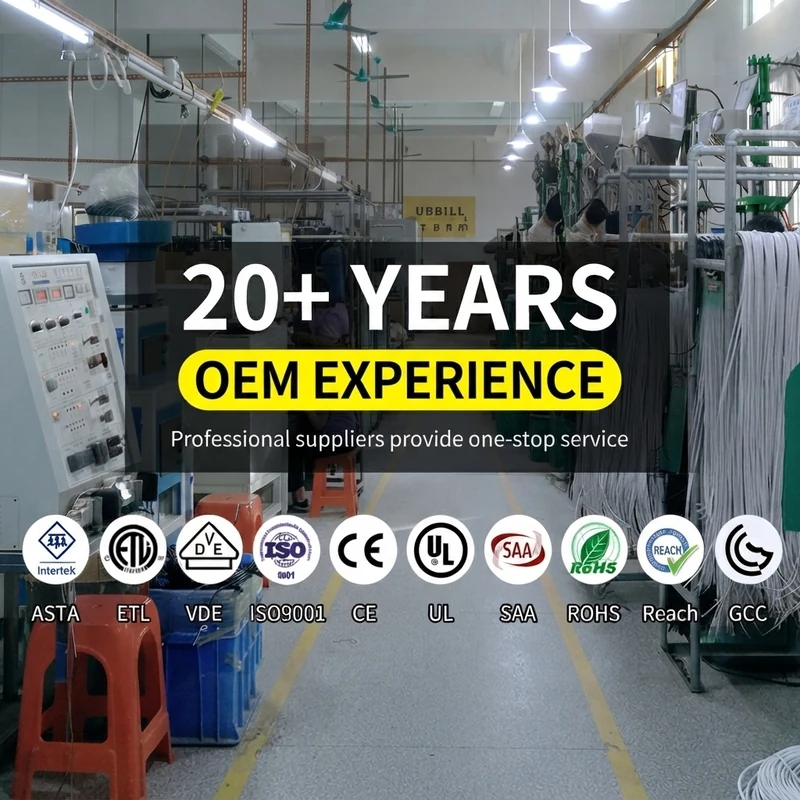
SEBLIP Power Cord Manufacturing Capabilities
SEBLIP is a power cord and electrical accessories manufacturer based in Dongguan, Guangdong, China, with over 20 years of factory experience and a 40,000 m² manufacturing facility.
Our manufacturing processes cover copper wire drawing and stranding, cable production, injection molding, product assembly, electrical testing, and final packaging.
We supply power cords for different international markets, including the US, UK, EU, Australia, Brazil, Italy, and South Africa.
With OEM and ODM capabilities, we support customized plug types, cable specifications, lengths, colors, and packaging to meet different customer requirements.
Our products serve distributors, importers, electrical equipment manufacturers, and other B2B buyers looking for power cord and electrical component manufacturing solutions.
Conclusion
From copper conductor processing to cable extrusion, plug molding, connector assembly, and final electrical testing, power cord manufacturing involves several interconnected production stages.
Each stage requires appropriate process control to meet product design specifications and applicable safety standards.
For buyers, working with a manufacturer that understands these processes and maintains control over key production stages can help support consistent product quality and long-term supply cooperation.